Pet Memories – Is There a Dog Heaven?

I’m really not a dog person, so why am I so weepy over a dog? Yesterday morning I took our old Buddy for his last slow walk around the block then helped him into the car for his last ride. Our vet was so kind to him – and to me – as she explained the procedure and administered the shot that put him into a deep sleep. With Buddy’s head growing heavy on my lap, I rubbed his ears and told him what a good dog he was. His relaxed snoring was a sweet lullaby that could not stop the pain in my heart as he left me.

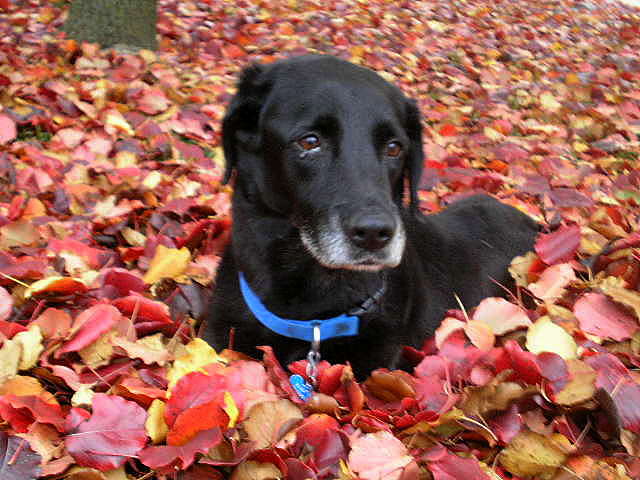
Our beloved pets leave us with memories as precious as those of the people who leave us. Often those memories are quite colorful, definitely something to add to our life stories. Who doesn’t remember their pets from childhood – a puppy chewing up your toys…or your dad’s expensive shoes, a frisky kitten attacking your foot…or the living room curtains. I remember Puff pulling me in my skates across an icy pond, I remember being in my pajamas and chasing Tiger in the night to save a crying rabbit, I remember Tammy the cat pretending Charlie the hamster was her baby. Our pets grow up with us and often provide us with our first experience of death. That experience doesn’t get any easier when we become adults, rather our pets move from being playmates to being more like one of our own children. They give us stories that help complete our lives. Now I will remember Buddy’s wistful brown eyes, how he loved being buried in the fall leaves and snuffling in the snow. Most of all I’ll remember how all he ever wanted was to be loved.

I hope there is a dog heaven, and a cat heaven, and even a hamster heaven – yes, I cried when our hamsters died. I’m glad I have Cynthia Rylant’s beautiful Dog Heaven book to comfort me.

When dogs go to Heaven, they don’t need wings
Because God knows that dogs love running best.

Buddy, I hope you can run again, right into the arms of your new Master.

Feel free to share your own pet memories in the Comments. I can use some comforting stories.
Posted in death, memories | 2 Comments

Natalie Goldberg on Writing Memoir

Unfortunately I was late to Natalie Goldberg’s talk about memoir writing, but I did come home with notes and a signed copy of her famed classic Writing Down the Bones. Ms. Goldberg read from her new writing memoir Old Friend From Far Away, inspiring the audience as well as herself as she hadn’t looked at her new release since it was first published in hardcover early last year. Her new book is filled with writing prompts such as “What do you know that you don’t want to know – go, ten minutes.” She read a beautiful descriptive example of a moment in Paris to illustrate how you should write “so others can feel what we felt and be enlarged.” She disclosed that the book was written in the throes of heartbreak, after a long-term relationship ended. She hiked in the woods, stopping to write chapters as they came to her.

I raised my hand to say that unless there is a defining event in one’s life, many memoir writers have a difficult time connecting their smaller stories, and asked if she had any comments on how to connect those dots. She referred me to one of her earlier books, Thunder and Lightning, and said we must find that link that brings it all together – “what throbs, what beats” through the stories. She also commented that in order to tell the past, you must be in the present and you will be informing the future…something to think about.

Ms. Goldberg was quite inspiring as she urged us all to write our memoirs not as a selfish endeavor, but to give pleasure to others – to “surrender ourselves as an act of generosity to others… Because it all goes down the drain when you die!”

Posted in book talk, memoir writing, writing skills | 1 Comment

Picking Cotton – Eye Witness Memory

I listened to a remarkable Diane Rehm Show the other day about a case of mistaken identity that landed an innocent man in prison. While we sometimes hear of this, what makes this case memorable is how the crime victim, Jennifer Thompson-Cannino, was absolutely dead sure she had picked the right man who raped her. Through her ordeal, she focused on survival and burning her assailant’s image into her brain so that he could be caught and put away. Based on her witness, Ronald Cotton was sent to jail in 1984 with a life term plus 50 years. Jennifer felt she had saved the women of America from this man. Unfortunately, she was wrong.

Eleven years later, through a new technology called DNA testing, Ronald Cotton was found innocent, and another man – who looked very similar to him – was found guilty and confessed. Jennifer was devastated by what she had done. Her memory had deceived her. Plagued by nightmares and fear of retribution, she finally asked to meet. Ronald, with gracious mercy, forgave her and set them both on a path of healing and activism. Ronald and Jennifer have written a book together, Picking Cotton, to detail their story. It is a frightening learning experience about the fallibility of memory. Jennifer had made an honest mistake that could have destroyed a man’s life, and what about other crime cases where strangers are identified based on eye witness and then convicted with no DNA evidence?

What is it with memory? Jennifer KNEW this was the man, beyond doubt, and the jury believed her. Is our lesson to always doubt what we see? Can we trust our memories, will our memoirs ever be the truth? For most of us this is not a life-altering question, we are not faced with being asked probing questions that may confuse or lead us to make mistakes. For those of us who aren’t crime witnesses, it does indicate that we might want to discuss some of our memories of events with others who were also there at the time. Is our perception greatly different from that of the others? Feelings, emotions, stress – which should not be negated in a memoir – can cloud what really happened. Augustin Burroughs would have been smart to ask his own family to verify his version of events before publishing Running With Scissors! When we collaborate with others we might find more of the truth, and we might even find ourselves recalling even more detail to add to our stories. On the other hand, beware of one person leading us to memories that never were. Collaborate, sift, think, then write your truth.

“If you accept that the way we think, perceive, reason, and judge is not always perfect, then it’s easy to understand why cognitive processes and the factors influencing these processes are studied by psychologists in matters of law; not least because of the grave implications that this imperfection can have within the criminal justice system.” –from All About Forensic Psychology

Posted in book talk, memories | Comments Off on Picking Cotton – Eye Witness Memory