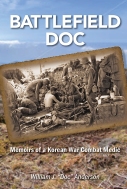
Memoirs of Wars in Africa

There are several fairly recent books out that detail the various civil wars in Africa – ugly wars that result in the purposeful killing of thousands of innocents. Sierra Leone, Darfur, Liberia, how we so easily can forget hideous terrors on another continent, especially when the victims are usually poor and the continent seems always filled with the cries of the starving and the wounded and the displaced. We (and the media) tire of hearing about the incessant need and go on to other news.

While in line for a double-chocolate-frappucino at the Starbucks in our local mall, I had a chance to peruse the coffee house’s latest featured book: The House at Sugar Beach by NYTimes reporter Helene Cooper. Perhaps you’ve read a review of it. I had, and had put it into my list of historically important books that would be too gory for me to read. It looks like I might be wrong.

Scanning through the book, I was pleased to see that Cooper’s writing was very personal and casual. She spoke to me. No sign of dreaded near-voyeuristic violence that would give me nightmares. I know there is at least one scene that will turn my stomach, but it seems that what is important to Cooper is not the replaying of torture and killing, but an understanding of what it meant to be an upper-class Liberian family ignoring the poverty and the attitudes of the everyday people around them. This is a story of a rich girl who learns to understand a different perspective. I’ll put it on my list of books to be read.

Other war-torn memoirs of Africa include last year’s Starbuck’s pick, Long Way Gone, by Ishmael Beah, about his life as a boy-soldier in Sierra Leone; The Translator by Daoud Hari which gives an indepth and encompassing account involving politics and history of the genocide of Darfur by a brave and optimistic man who worked with foreign reporters and investigators; and Tears of the Desert by Halima Bashir, a young doctor who dared speak up about a vicious attack on schoolgirls by the janjaweed militia in Darfur. Read at your own risk!

Posted in war stories | Comments Off on Memoirs of Wars in Africa

Multicultural Books, Part II

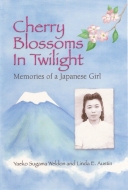
I love books about half-American half-some-other-culture people because I am one of them. My Japanese mother still causes me consternation and I have been left with strange words and phrases known only to our family, such as “musical bridges” to describe those certain bridges that make noise as your car tires roll over them and “yellow voice,” meaning a high, nasal and usually off-key singing (who, me?). Not to mention odd food combinations: “sushi” with deli ham and mustard, seaweed sprinkles and sliced bologna on rice with soysauce, Spaghetti-o’s on rice for that ultra carb lunch. And so I love it when others share their unusual melding of cultures, usually resulting in both the comical and the frustrating. I feel a bonding of experience.

Last week I mentioned Iranian-American Firoozeh Duma’s latest book, Laughing Without an Accent. Her earlier book, Funny in Farsi, is on my reading shelf and I am currently working on Leslie Li’s Daughter of Heaven. I have greatly enjoyed Bento Box in the Heartland by Linda Furiya and the children’s books by Grace Li: Year of the Dog and Year of the Rat. If anyone has read other good cross-cultural books, let me know of them!

Related to having parents that are from the “old country” is that other problem we have of parents being of the “older generation.” Therefore, most of us have funny (or maybe not so funny!) stories of family life to share. I am only lately telling my daughters some not-so-funny-at-the-time stories from my childhood… the home haircuts, the prom debacle… Finally I can look back and laugh!

Posted in capturing memories, multicultural | 1 Comment

Multicultural Books, Part I

“It is not the job of the news media to report on the typical, to give insight into a different culture. It is up to the storytellers and jesters, the memoir writers, the ordinary mothers and daughters” and fathers and sons (my addition). So writes Annie J. Kelly in her review of Firoozeh Duma’s memoir Laughing Without an Accent about the everyday adventures of living in two cultures.

Duma, in a series of comedic vignettes, engages her American audience in a fun learning lesson of what it means to be Iranian – or rather, of what it means to have Iranian customs and ways of thinking in the very different culture of America. Instead of hearing all the bad news about Iran, we are treated to the good news of how the Iranian people have commonalities with us. Despite any physical or cultural differences, it is amazing how our family lives can be so similar!

My favorite reads are multicultural. How fascinating to open one’s mind to the realities of people who are not just like me. How easy to read the newspapers and write off another country and its people as fanatic, backward, violent, brainwashed, etc. Books like Duma’s engage us with the truth that people everywhere are more alike than different, and to use comedy to bring that message across makes for a warm good feeling.

Posted in multicultural | Comments Off on Multicultural Books, Part I