
Maybe you’ve heard about the controversy with the newly published novel American Dirt, where a “white person” has written about what’s left of a Mexican family escaping violence by illegally crossing into the US. Apparently it’s a romantic drama thriller or something like that, which Oprah has endorsed for her famous book club, thus launching it to fame and misfortune. I’m appalled at the level of vitriol against the author, who seems to be well-intentioned but… let’s get to that in a bit.
Seems the publisher saw a book pertinent to the times, attractive fiction for non-Latinx masses to gobble up, and they ran for the dollar signs ahead. Oprah doesn’t know life in Mexico so she wouldn’t catch any inconsistencies, she just saw a gripping story. A couple famous Latina writers thought that at least it would get into the hands of people who need to learn a different perspective, even though it wasn’t perfect. Many others launched into ugly diatribes.
Looks like nobody vetted the book for accuracies in culture or Spanish language. Big mistake. The author wrote “out of her lane” with not enough knowledge and got a huge advance—something no Hispanic/Latinx person would ever get. Therein lies the other half of the controversy. Somebody getting big rewards for writing somebody else’s story, where those somebody elses would never get that kind of acceptance or fine treatment despite their authentic stories. That part is not the author’s fault, that’s a problem with the traditional publishing industry. And maybe it’s a problem with readers, too. Would we buy into bestseller status a novel by someone not of our color or culture?
Anyway, this gets to lessons for life writers (any writers): do your research! Even though it’s your experience and your memories, make any historical and cultural details accurate or somebody will notice. If you are writing about other people’s experiences (a parent, grandparent), you probably need to research around them. Even if your book is just for family, you owe it to them to be as accurate as possible about common details that can be verified, especially historical dates.
For my mother’s memoir, Cherry Blossoms in Twilight, I did a LOT of research and had a Japanese man vet the book’s details. He was near the same age as my mother and had also lived through WWII in Japan as a teen. He caught a few errors I would have been embarrassed about. When I wrote Battlefield Doc, I did a LOT of research about the Korean War, learning about different weapons, the weather, medical care so I could help explain things better and ensure what Doc remembered was correct. (Military people and military history fans are sharp-eyed and quick to point out discrepancies.) When I edited a multi-lingual man’s multi-country memoir, I did a LOT of research on those countries and how to spell foreign words.
Details of history and culture give life stories a setting in time and place, giving readers a bigger picture and richer experience. Readers expect these details to be accurate. If you’re not sure of something and could not find an answer and it’s important to include, you can simply say “I think” or “As I remember.”
(By the way, do not post a review for a book you’ve never read)


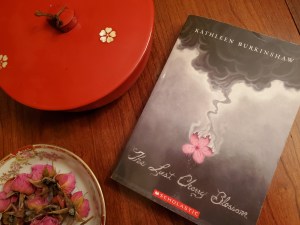 I like how the first page of each chapter features a piece of actual propaganda or news headline. Most people don’t realize the propaganda that went on in Japan, how the media was censored and bad news hidden, how children were indoctrinated in school. Like in Germany. Disagreeing could make you disappear in the night. The Last Cherry Blossom mentions this.
 moonbridgebooks