The Salty Path of Adding Fiction to Memoir

Memoirs are based on reality—your reality as you remember it. Don’t make up (lie) about important things, partly because somebody will know or find out and then people wonder if they can trust anything else you wrote. Not to mention, as in the case of The Salt Path by Raynor Winn (pen name), you could be toying with people’s empathy and emotions, and we generally don’t like being fooled.

If for some reason you want to completely or partially hide a truth that’s important to the story—because it is a very bad reflection on you or too embarrassing/traumatizing or you don’t want to get in trouble with—write something general to explain, don’t flat out lie or make up something. By the way, including what you think is a negative look on you can just make you seem human like everyone else, and more relatable. We all make mistakes and sometimes behave badly. Unless you seriously hurt someone or committed crimes, but even then, people are curious about these stories and they can be about redemption and healing.

The Salt Path memoir has a great storyline of running off to escape life stresses and indulge in nature to find physical and spiritual healing, so for the most part it is probably true and inspiring, so much so that a movie has been made of the book. Sadly, the surrounding “facts” taint the story, and for some it taints the author and the whole book. Beware. Know that you can always fictionalize your story and say it is “based on a true story,” which works for commercially available books which are then labeled as fiction. Don’t try to sell this to your family as “truth,” though.

AP article about The Salt Path book controversy

Posted in book talk, lifewriting, memoir writing | Tagged , | Leave a comment

Writing memoir and life stories: Not just what happened

When writing your stories, don’t make them a laundry list of what happened and when. That’s important, but there’s more to the stories than that, especially if you want to make them more interesting. You are the main character of your stories and your family and other readers are interested in a bigger picture—what you thought, how you felt, how did something affect you. A May 21, 2025, article in the Transylvania Times is an important read highlighting that the “heart of memoir” is your emotional journey.

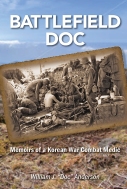
When I put together my mother’s Cherry Blossoms in Twilight, about her life in Japan around WWII times, my Korean War medic veteran friend’s Battlefield Doc, and my very elder neighbors’ early lives in our town, I tried to get their thoughts and feelings about what they were experiencing. Mostly I failed. I suspect those of that older generation were accustomed to NOT thinking or feeling too much, or at least to keeping things to themselves. Many people nowadays feel little to no qualms about telling personal details and expressing thoughts, which if included in their written stories, makes them into more nuanced 3D characters, their personalities shining through.

Doc said he had to put any emotions aside else he would not have been able to be a good medic. He had to focus on trying to save lives under pressure and not get attached to anyone as they could be here one day and carted away the next. There was no room for emotions, just survival and duties. My mother mostly said she couldn’t remember what she thought, except for a few moments she was scared or when she thought it silly that kids with pointed sticks could be a match for enemy soldiers with guns.

We of our more open generations can feel more free to say how we felt or how something affected us. Readers of our memoirs or life stories can have a richer experience of history, culture, and who we are. On this Memorial Day weekend, we honor veterans who gave their lives during wars but also our ancestors. I hope you have some good stories of these family members, whether they expressed their thoughts and emotions or not.

Posted in capturing memories, ghostwriting, history, lifewriting, memoir writing, writing skills | Tagged , , | Leave a comment

Boat Baby: An Immigrant Story, an American Story

The other day I attended an author talk at our wonderful library featuring news correspondent Vicky Nguyen speaking about Boat Baby, her new memoir, now a NYT bestseller. “Boat people” escaped South Vietnam after the takeover of the communist party after the Vietnam War. (April marks the 50th anniversary of the fall of Saigon). They were refugees undertaking a dangerous journey by sea, in whatever boats that would take them, to escape a war-torn country, surveillance, and persecution, and they landed (if they were lucky) in nearby Asian countries. Many perished from overloaded boats, storms, or pirates. This reminds me of all the refugees desperately crossing the Mediterranean in more recent years. Of other migrants risking their lives, carrying almost nothing, to escape wars and terrible conditions in their own countries.

St. Louis news anchor-reporter Michelle Li on the left, news correspondent-author Vicky Nguyen on the right

Many of the boat people came out of the refugee camps due to being sponsored by American families who opened their hearts to help them adapt to the US. Open minds, open hearts make the world a better place, and helped Nguyen realize a successful life here. She stressed the value of community, when people supported each other as she felt supported. This seems to be missing these days as people have become insular and closed to anyone not like themselves.

Nguyen said that as an investigative reporter who has to do a lot of research, she focuses on listening to people and not judging; she wants to hear their stories, to know why they think and behave as they do. She sees the humanity in others who may look and think very differently than she does, and she offers this as a way for all of us to see each other—not as enemies but fellow humans. So difficult in these extremely divisive times. Reading memoirs, though is a way to hear the experiences of others and hopefully build empathy and understanding.

While working on her memoir, Nguyen discovered stories of her parents she had never heard before. Listening to their fascinating stories was a beautiful experience. “We can reflect and learn from the past,” and we can even realize things about ourselves, why we are the way we are. In the US, especially, most families have immigrant stories, other family stories of sacrifice and hardship for a better life for their children. Get those stories if and while you can.

(I didn’t actually know who Vicky Nguyen was since I only watch local TV news, but I do know our well-loved local news anchor-reporter Michelle Li of the Very Asian Foundation who facilitated the discussion with Ms. Nguyen. Between the two of them, they attracted a very large audience!)

Other Vietnamese refugee memoirs:

Of Monkey Bridges and Banh Mi Sandwiches: From Saigon to Texas by Oanh Ngo Usadi

The Best We Could Do: An Illustrated Memoir by Thi Bui

Posted in book talk, heritage, history, multicultural, overcoming, storytelling, war stories | Tagged , , , , , , | 2 Comments