
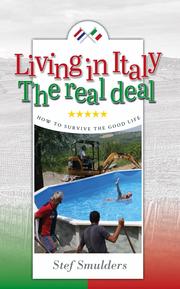
I love reading about other cultures, especially from a foreigner perspective. Natives tend to be inured to their surroundings while foreigners—those with open minds—are better able to see the delights and peculiarities of the land (and people) they are adventuring in. And so I had fun reading Stef Smulder’s memoir of moving from the Netherlands to an Italian village where he and his partner bought a house they dreamed of turning from ugly duckling to a swan of a bed and breakfast. And so began a grande lavoro (big project). Oh, my! “How to survive the good life.”
Stef wrote a series of short, light-hearted chapters detailed the amusing and often trying characters and situations he and husband Nico encountered as they settled into this new country. Italian culture is quite different from their Dutch homeland. Fortunately, Stef knew enough Italian to get along. Finding the right house, dealing with government workers and paperwork, choosing di fiducia (trustworthy) workers who will spend many noisy months in your house—laugh so you don’t cry! Yes, the book reminds me of Under the Tuscan Sun, but with Dutchmen and a dog. A glossary of Italian words and phrases used is included at the end. You may want to learn some of those fun phrases.
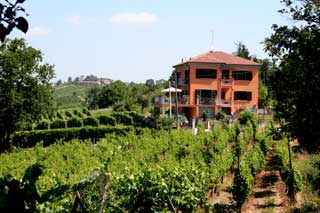
The preface of the book says it is a work of fiction. Stef says it is a memoir but with tweaking to make it more entertaining. That’s often a consideration for memoir writers—when does memoir become fiction? If you are making up stories, then you have a book “based on a true story.” Incorporating dialog half-remembered or likely said, adding some unimportant flourishes, or changing names or otherwise altering people a bit to protect their privacy is okay as memoir. Stef and Nico really did buy a house with a lovely view of hilly vineyards, and eventually—we may think miraculously—it transformed from a grey concrete block to a beautifully landscaped home amenable to visitors. Take a look at the Villa I Due Padroni website and you may be tempted to book a vacation in the “Tuscany” of Lombardy, just south of Milan, a fresh breath away from the touristy cities. I know you would enjoy meeting Stef and Nico. Stef writes so personably, you will feel you are friends!
If you like Italy, see also my post about A Zany Slice of Italy, where Ivanka marries an Italian man and discover his relatives.
 Fangfang filled Galloping Horses with incredible detail from much research, friend and family interviews, and notes she and her mother had kept. She spent six years doing research on the important events because “I want my book to have credibility for general readers as well as academic people.” Fangfang captures in story what went on during this time and explains the results and implications of the crackdowns affecting families, culture, universities, and the economy. I learned about Chinese art and teaching methods and about the art of music composition as Fangfang was an accomplished pianist at a young age. She made all of this easy to understand and the story line flows smoothly—I was surprised to see what an excellent writer she is, often poetic. I have read several books set during the Cultural Revolution, but nothing like this. I highly recommend this fascinating and poignant memoir for anyone interested in history and the arts or in a compelling story of survival.

 moonbridgebooks