
That’s what our church’s youth leader said this morning during his testimony about his time as a Marine in Iraq and how we can learn that others that seem so different are so much alike. During January we were learning about Christianity and Islam—half brothers who don’t understand each other so well. Jess’s statement is a great inspiration for telling stories—and for writing and reading memoir. I have an online friend serving in the south of Africa now, in the Peace Corps, and her friends in the US are horrified at her stories yet feel compassion for the people she is living among. Their culture and their lives in poverty are so different than ours, yet they smile and they love and need love like everyone does. Now we want to send them care packages.
Jess’s statement is also an inspiration for writing family stories. He also said that “we are a continuation of our mothers’ stories.” Not that father’s aren’t important, but our mothers carried us for nine months and gave birth to us, and then raised us. Arguably and for various reasons, mothers can be much closer to their children. Who our mothers were and who they became affect us deeply, forming us. For adoptees, the loss of their birth mother is deeply affecting, and their adoption parents have their backgrounds and experiences to shape lives. Our parents weren’t born parents, they have back stories. What we like or don’t like about them is mostly created from those back stories. Don’t you want to know what those stories are?


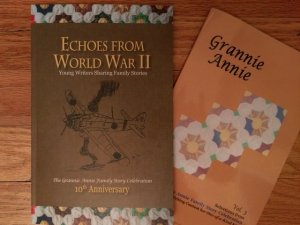 The heirloom silver spoon that stopped a bullet, a kind woman who saved the enemy and found a husband, hiding from Germans in North Carolina, a beach full of oranges—these are some of the stories found in Echoes From World War II, the latest in

 moonbridgebooks