Editing and the strategic marketing plan for your book

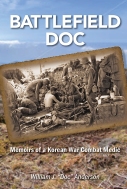
Battlefield Doc is now with the (real) editor! Nearing the end of a three-year slow journey, this collection of stories by a Korean War medic on the front lines of hell has been occupying my time lately in the big push to publish this November. That month holds Veteran’s Day and is National Lifewriting Month. I am thinking ahead for marketing purposes, to hook into these special occasions. Marketing is a plan, not a last-minute thought.

This morning I spent three hours at a strategic planning meeting for a nonprofit looking for more members and corporate sponsorship. Our facilitators described something like the business plans I am used to creating for book writing and marketing. What is the group’s mission (purpose of the book) and the most important strategic goals to help accomplish this mission (overall objectives needed to reach your specific readers). What are the benefits of being part of your group (why would somebody want to read your book). What initiatives (specific tactics) will you use to reach those goals (readers). Most writers don’t want to think about this, but they should after the first draft is completed or even before starting to write. Answering these questions can help focus the book to its audience and let you add things to the story that will help sell it. This is vital for nonfiction writers, including narrative nonfic writers (memoir authors). Even if your memoir is only for family, you want to consider the specific purpose of the book and what will interest your family.

Battlefield Doc: Memoirs of a Korean War Combat Medic is about the real life experiences of our soldiers beating back waves of enemy (and forced civilians) and how combat medics went with them trying to save lives. I have to target readers who want to know details of grunt soldier’s lives, so nobody leaves a bad review because we didn’t include what President Truman did or didn’t do or how awful General McArthur was at that time. Enough books exist about the history and politics of the Korean War, we want to offer something new. A business (strategic) plan helps identify how your book can stand out in the crowd.

As for editing, I am a ferocious editor, but this book was extremely difficult to put together from a stack of handwritten journal notes, the stories separated and with no dates. My veteran friend and I have picked the manuscript to pieces, so we both are blind to errors now. Our eyes see what they want to, not what is. I sent the “final” draft to the editor and also gave a copy to a friend who loves military stories. She is my beta reader (test reader). Within hours she had suggestions to make the important intro chapter read better (no typos—yay!). Never underestimate the importance of a second (and third) pair of eyes.

What is the purpose of your memoir? Why are you writing it and what will readers get from it?

Posted in memoir writing | Tagged | 1 Comment

A picture paints a thousand words – a memoir of travel and art

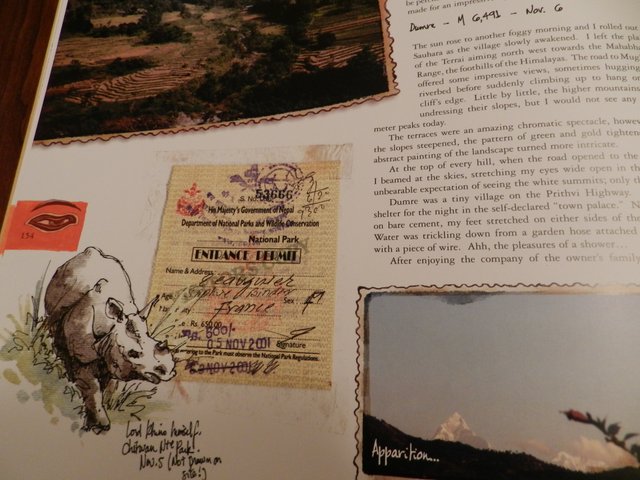
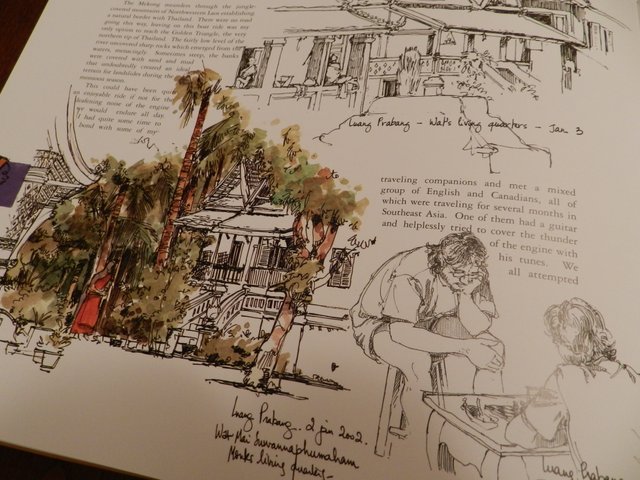
Memories can be captured in art as well as words. Sophie Binder is a freelance designer/illustrator who left her job and home in St. Louis, Missouri, to go on a solo bicycle trip around the world. Fourteen months and 14,000 miles later, she returned, having pedaled through sixteen countries, including her birth country France, and Turkey, Syria, Egypt, India, Nepal, and Vietnam. Traveling by bicycle at her own pace allowed her to spend time sketching and to be led by curiosity instead of schedule. She kept a journal and filled seven sketchbooks. “The memories for me are physical. I look at the paintings and sketches and remember the weather, what was going on, the old man who sat down next to me. The sketches retain memories.”

Sophie BinderYears later, Sophie published The World, Two Wheels and a Sketchbook, documenting her epic journey in words and more than 600 in situ works of art. A few weeks ago, she spoke about her trip to a full house audience at a local library. A natural storyteller, Sophie, had everyone laughing at the anecdotes she told about the people she met and the difficulties she encountered. While she saw impressive sights, she was most interested in the people she met. “It is very easy to judge from the background you have, from what you were born to, what you are used to. You don’t have the whole story,” she says. “I learned to step back and refrain from judging too much.”

Since no publisher would take on a big, full color book by a non-famous person, Sophie published the book herself. Using her graphic design talents, she laid out the interior and created the cover. The 280-page plus book combines stories and commentary using typed text and copies of handwritten journal notes, and is full of sketches, watercolor paintings, photos, and ephemera. Sophie’s art (and layout) is beautiful – I will let the photos here do the talking. Because of the cost of printing, she does not make much money from the book, but it is her labor of love and I think the book is gorgeous, well-written, fascinating and amusing, and worth every penny. I and many others at the library event could not resist buying a copy.

Buy The World, Two Wheels, and a Sketchbook or learn more about it on Sophie Binder’s website.

Sophie Binder

While I don’t recommend the average person try to create a masterpiece like Sophie’s, I do encourage anyone with artistic talents to include copies of sketches or paintings in their memoir.  My mother sketched as she told me her stories, and I included those in the print copy of Cherry Blossoms in Twilight about WWII Japan. Poems That Come to Mind about dementia caregiving has some of my own sumi-ink art. These are in black and white, but full color printing is now an affordable possibility IF the book is not too long and IF coffee-table-book art quality is not required. Lulu.com actually does a good job with color interior, but I don’t generally recommend them for public sales (see my article on publishing with Lulu and color printing with Lulu). Amazon CreateSpace and Ingram Spark both do a decent job with color interior, but always get a print copy color proof before giving the green light to publish. If the color is off, ask your interior or graphic designer for help tweaking the colors (greens and blues in particular may cause trouble).

Sophie Binder

Sophie Binder

PS: Sophie had many funny stories about her trip, but as so many people were curious how she survived, I will tell you that she said vultures followed her, probably wondering “When will she drop.”

Here’s another post about using art: Using artwork and photos in memoir

Posted in book reviews, book talk, journal | Tagged , , | 1 Comment

The Bitch Wall of the Vietnam War

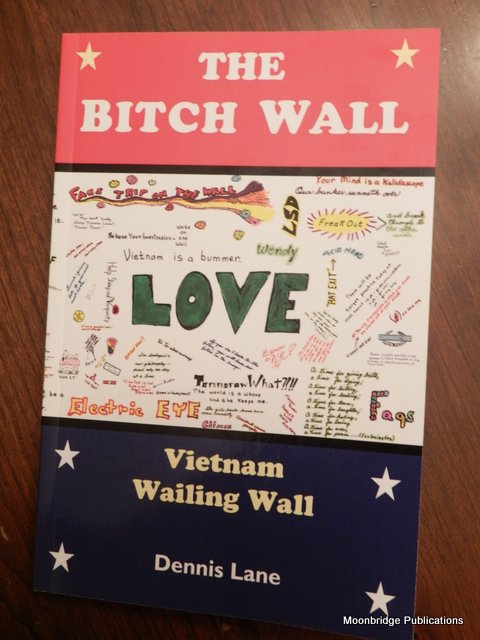
Bitch WallJust in time for Memorial Day, I started reading The Bitch Wall, a fictionalized story of real experiences in the Vietnam War. Author Dennis Lane had a book signing a few days before and little did I know he was famous around town. My friend and I walked into a book store full of his friends. The audience settled in to listen and Dennis spoke with passion, his words tumbling out so rapid fire I was glad I had researched his book a little beforehand. He explaining how this “Bitch Wall” in his artillery unit’s command bunker came to be, how it filled with graffiti that “held the thoughts of all those who had become weak, vulnerable, and crazy since arriving in Vietnam.” And that was pretty much everyone. He took photos of the wall before he left, knowing someday he would write a book about it. He explained the book is not meant to be historical, but 98% of it is what happened. The characters are composites.

Standing in line afterwards to get my book signed, I began talking to the young man behind me and learned Dennis is famous because of his work helping others, whether military veterans or the underprivileged. The young man had known Dennis for quite a while yet did not know about his service in Vietnam. I was curious then since Dennis’s stories seemed to literally explode out of his mouth during his presentation. Many combat vets can’t or won’t speak of their experiences. Dennis said “you never get over war.” He told me he felt he owed it to his combat buddies to tell their stories, and that’s why he finally opening up. He likened the Bitch Wall to the Wailing Wall in Jerusalem. Men who were only 18 to 23 years old “created a holy thing,” a testimony of what they felt, irreverent or wise or despairing, as they lived through the special craziness that was the Vietnam War.

The Bitch Wall is Dennis’s first book and so the writing is not perfect, but the book is a fast read that bleeds truth and dumps dirt while the haze of lit joints swirls in the air. Four well-drawn main characters go to insanity and back. Dennis says the book is meant to make people uncomfortable. While there is sex (not explicit), plenty of drugs, and rock and roll, “most important is the internal struggle, what do you decide to do.” This story, while fictionalized, reflects history and our culture at the time and captures extraordinary circumstances that tested souls. As I’ve mentioned before, fictionalizing real life experiences gives the freedom to explore more ground and create a bigger story. And war stories are big, complex stories.

For another perspective on the Vietnam War, see my post about Once Upon a Mulberry Field by C.L. Huang.

Posted in book talk, history, honoring veterans | Tagged , | 3 Comments