
“Now it was time to stop the dance I had started . . .”
For several years, Kathy Pooler has been sharing her memoir writing experiences on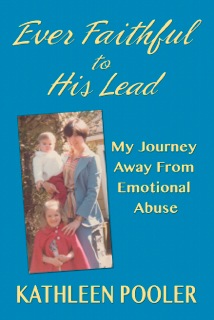 the Memoir Writer’s Journey blog. She is now celebrating the recent publication of Ever Faithful to His Lead, her memoir of overcoming emotional abuse. She is on a blog tour this month—and October is National Domestic Violence Awareness Month. We think of violence as physical, as in the high profile cases of Ray Rice of the Baltimore Ravens punching his then-girlfriend unconscious and Victor Blackwell, then a USC football player, arrested for assaulting his girlfriend. Emotional abuse usually goes along with physical abuse, but also can be used alone. Kathy exposes the nature of not one, but two emotionally abusive relationships and how women can be vulnerable to this. Judging by all the people amazed that Janay Fisher married Ray Rice anyway, Kathy’s book is needed. I’m happy to have Kathy answer a few questions on my blog today, and I thank WOW! Women on Writing for fitting me into Kathy’s tour schedule.
* * * * *
Kathy, a number of memoirs document abusive relationships. What made you decide to write and publish your particular story?
I didn’t start out thinking I was going to publish an “abuse” memoir. I knew I had been through several harrowing challenges in my life related to my mental and physical health. In later years, long after surviving those challenges, I looked around and saw the joyful life I was living. I wanted to share my story of hope. No matter how far down into the abyss you may sink, there is always hope for a better life. As I kept writing, the story revealed itself to me. There’s a big difference between journaling your thoughts and emotions and in shaping a story that will appeal to others. It starts with writing raw. If you want to publish, you keep writing until it’s right.
A no-no in writing memoir is to write while emotions are still high, while experiences are fresh. You have done a good job of telling your story in what I think is an objective manner and after you had time to reflect. Did you keep a journal throughout the timeframe of your memoir story and work from that, and when did you feel ready to start writing the book?
Yes, I have journaled for years and those journals became the seeds for my memoir. However, it wasn’t until I began taking memoir workshops and writing vignettes from that time period that I developed a full awareness of the impact those circumstances had on me. In other words, I became connected to the pain and regrets that were still brewing underneath the surface. Sometimes you think you have moved beyond the pain, but as in my case, despite physically moving forward, there were pockets of pain I had buried. They reared up at times when I least expected. When that happened, I had to pause and reflect. Sometimes I journaled. Sometimes I walked away and gave myself some time and space to absorb the truth.
I feel emotional distance from the event does help you see it objectively. Part of the process of writing a memoir is being willing to process the emotion of digging up the pain. The only way to the other side is through. You have to do whatever it takes to help yourself through that process in order to share the valuable lessons learned with your readers. In the beginning, I think it is important to write raw and for yourself. Let the words flow without censoring or editing. And don’t show it to anyone until you’re ready.
When did you first tell your family you were writing a memoir? Did you give your friends a heads up? What was everyone’s first reactions, and did you consult with family during the writing or just show them the final result and hope they were okay with it?
Yes to all the questions. I’ve never been secretive about expressing my desire to write a book so it came as no surprise to my family and friends when I began getting serious about doing so. For the most part, I shared my writing freely and enjoyed ongoing support and encouragement. During the first writing course I took through Writer’s Digest, I wrote stories about my reaction to my son’s substance abuse issues. I mailed him one story and he later told me when he opened the letter on the subway, he had to quickly put it away for fear he would break down in public. He read it when he returned to his apartment and called me to tearfully tell me how my story affected him. It opened up a dialogue between us that remains strong today. Both he and my daughter have read my memoir in its various stages of development. They both have offered their feedback and support. I consulted my family and friends often about details related to scenes in my memoir.
Were you at all afraid of either of your former husbands’ reactions to your memoir? How did you handle those situations?
The irony for me is that “Ed” in my memoir, the father of my children, died suddenly of cirrhosis six weeks after my memoir was published. I was there at his bedside along with his family and my children. He knew I was writing a memoir, but we never discussed it while he was alive. (We had a civil relationship and mutual respect for our roles as parents.) If he was alive, it is the consensus between my children that he would not have approved. I changed names and some identifying characteristics to protect his privacy. At any rate, it’s a very sticky issue and one I grappled with many times. In the end, I reconciled my concerns with the belief that this story is about my truth and my choices, and I made sure I did not intentionally disparage him in the story. Both my children read the memoir ahead of time and offered their commentary and blessings. I have lost complete touch with “Dan” and his family by choice and it has not been a concern. I did consult an attorney about liability issues.
When the book was released, did you or your children have second thoughts about strangers reading about your personal lives? That can be cringe-worthy!
Yes, I knew I had exposed my vulnerabilities and flaws and wondered how readers would react. However, by the time the memoir was published, I had addressed all the cringe-worthy scenes. It is tough to put yourself and all your poor choices out there. I’m happy to report that so far, the response from readers has been overwhelmingly positive. We all make mistakes and there is strength in allowing ourselves to be vulnerable.
Is there anything else you’d like to say about writing or publishing your memoir?
Writing a memoir can be a transformational experience for the writer, as well as for the reader. Writing my memoir truly helped me to heal and shed the guilt and shame that had burdened me for years. If one person is able to connect to their story through my story and take away something valuable for themselves, I will feel I have accomplished my goal of sharing hope.
We all have a story to tell. Learn the art and craft of memoir writing. Start writing and keep writing. The story that’s meant to be written will reveal itself.
And one last thing: Enjoy the ride!
* * * * *
Thank you, Kathy! I think many women will be able to understand and relate to your story. Your book is well-written, and I was surprised by some of your insights. For those who are not religious, religion and God are not the main focus. Congratulations on the publishing of your book, and I hope it helps many people understand the complexities of abusive relationships.
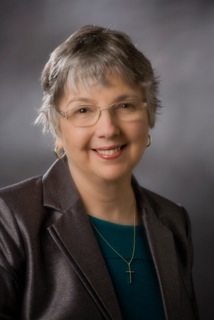
Kathleen Pooler is an author and a retired Family Nurse Practitioner. She is working on a sequel to Ever Faithful to His Lead entitled Hope Matters, about how the power of hope through her faith in God helped her to transform, heal and transcend life’s obstacles and disappointments: domestic abuse, divorce, single parenting, loving and letting go of an alcoholic son, cancer, and heart failure to live a life of joy and contentment. She believes that hope matters and that we are all strengthened and enlightened when we share our stories.



 moonbridgebooks