The sweet scent of memories

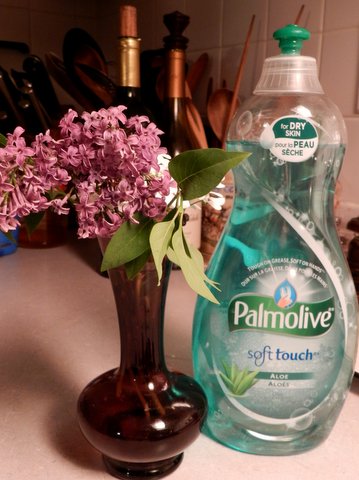
I think we all know that certain scents trigger memories. Certain foods cooking, cinnamon, grandmother’s perfume, lilacs, even Aquanet hairspray (think 1980s big hair days), but how about dishwashing liquid? I got out a new bottle of Palmolive dishwashing liquid last week—soft touch aloe (for dry skin)—and went into some kind of reverie. What was it about the smell? Clean and sweet, not overpowering. The scent makes me pause and breathe in deeply, so I think it must be tweaking some kind of forgotten memory. Maybe I’ll figure it out, but I sure am enjoying washing the pots and pans these days!

Meanwhile, the lilacs are blooming, and I know what memories those trigger. Do you have scented memories?

DSCN5336

Posted in capturing memories | 5 Comments

Life Writing as Fiction: Ramon Calhoun’s “Blackanese Boy”

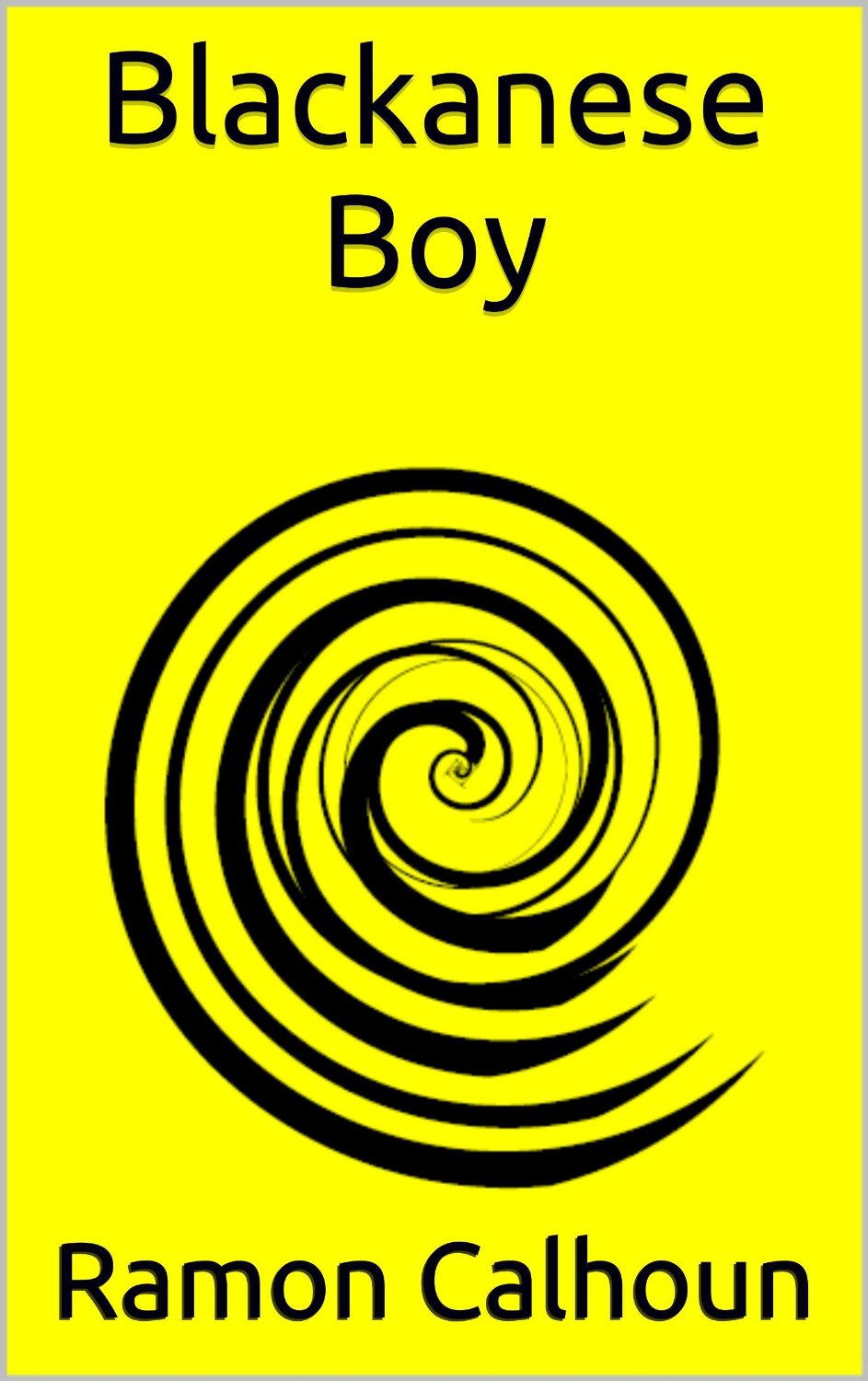
I have mentioned before the value of writing about your life using fiction. Ramon Calhoun did this with Blackanese Boy, recently published. I met Ramon through a Facebook group for half-Japanese people. Most of us grew up during a time when being mixed race was frowned upon. Stares and “What are you” were common greetings. There was residual hate from WWII and racism against blacks was rampant, so imagine being half black/half Japanese, caught between two cultures, belonging to both and neither. And what if you had a Hispanic name? What does it mean to be American? Ramon is my guest today.

*  *  *  *  *

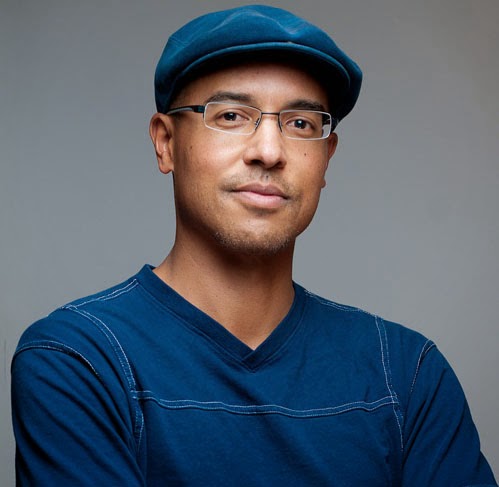
Ramon Calhoun:Ramon Calhoun
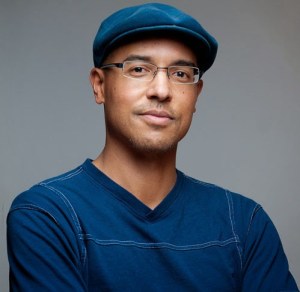
I grew up in San Francisco and have lived most of my life here. My father is Black and my mother is Japanese-American. I am an only child. My parents separated when I was very young and I was raised by my mother and my Japanese-American relatives. I thus had very little exposure to Black American culture and traditions besides TV, movies, and radio.  Growing up being immersed in JA culture, I thought I was Japanese. Of course, I never looked Japanese.  There was always this brown-faced, flat-nosed, curly-haired person looking at me in the mirror!  This was brought to my attention from time to time by my friends. Identity, especially racial identity, has played such a strong role in my life. I think this is very much the case for those who are Black and mixed with something else. As an adult, I’ve tried to reconcile the various strands inside me (Black, Japanese, and American). I embrace who and what I am now, but it’s been a long, continuous, and often challenging, journey.

I wrote this book for a few reasons. My identity as Blackanese has vexed me for a good long time. Growing up, I often didn’t know how to identify—with which group? It has changed and evolved over time. I’ve identified at some point as Japanese, Black, Mexican, Filipino, Indian, Hawaiian, and even Italian! It took me a while to actually identify as mixed, as Blackanese. Fact this happened as an adult. Writing the book was a way for me to process these thoughts and emotions and ideas; to try to better understand the struggles I’ve experienced. The struggles that are borne internally as well as those placed on me externally.

Another reason I wrote the book is that I don’t see stories or books that feature people like me (i.e. Blasians) out there. There’s a small but growing body of work that have white hapas (half Hawaiians) in them, but not Blasians. We seem to not exist, at least in literature, in fiction. I wrote the book as a way to fill that gap, to let readers know that people like us exist. I WANT to read stories and books that feature us as main characters and that take our unique experiences and turn them into fiction.

Whether good or bad, the novel relates directly to my experiences. You’re often told to write what you know; well, that’s the genesis of this book. I used myself and my life experiences to create the main character, Rafael Halifax, as well as the other characters in the story. Now I could’ve written a memoir, but I didn’t want to do that. I feel novels have more power than memoirs because of the use of the imagination, the use of narrative style, and so forth. So I used my experience as the basis, but fictionalized it in order to raise it above the level of direct reportage and journalism. The novel, though simply written, went through various drafts. The first one read too realistically and close to my life. With each draft, I tried to remove elements that were overtly autobiographical and to create something more from the imagination. I hope I achieved that.

I hope readers gain some insight about what it’s like being Blackanese—the challenges and struggles such a person experiences in this highly race-conscious country. I’m not speaking for all Blackanese though, but more from my specific experience. I hope readers are moved by the story, and also I hope they’re able to connect with the main character and what Rafael is going through even though they may not be mixed or Blackanese. I hope that via this specific story, the universal can be gleaned, and that people come away with a greater understanding of all people.

*  *  *  *  *

I’ve read about half of Blackanese Boy so far and am enjoying learning about this different perspective. Definitely a different world from my own Midwestern half white/half Japanese upbringing. Main character Rafael not only struggles with racial and cultural identity, but also with his parents being divorced and with coming-of-age issues. This is Ramon’s first book and he’s learning the ropes of writing and indie publishing. Ramon has a good voice and writes good dialog, and I am loving little Rafael—I want to scoop him up and hug him. I’m looking forward to watching him grow up.

Blackanese Boy


Posted in book talk, multicultural, writing | Tagged , | 1 Comment

Mary Gottschalk: The Writing Process

Last week I posted about my memoir writing process as part of a blog hop. I tagged three writers to post about their writing processes this week, so stop by their blogs today. Writer-editor Jeffrey Penn May  blogs all about writing and his latest book is Eight Billion Steps: My Impossible Quest For Cancer Comedy. Kristin Nador, who also dishes writer encouragements and advice on her blog, is working on a suspense novel. Mary Gottschalk has made a career out of changing careers, and has written a memoir and now her first novel (release date May 1). She is my featured guest today to avoid having her interrupt a series of posts on her blog, A Fitting Place, based on issues brought up in her novel. I enjoyed reading her introspective answers.

* * * * *

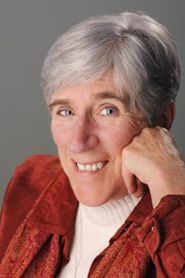
Mary-Gottschalk-Author

Mary Gottschalk –

What am I working on?

I have just completed my first novel, A Fitting Place, about a woman who finds solace in a same sex relationship after her husband of 15 years leaves her. This unexpected and passionate relationship offers an intimacy Lindsey has never known. Before long, she finds herself ensnared by the same destructive inter-personal dynamics that plagued her marriage. Unable to blame her dilemma on traditional gender roles, Lindsey is forced to look in the mirror as she seeks to define what she wants from this—or any—relationship. Freed from the straightjacket of societal notions of friend, wife, and mother, Lindsey calls on inner resources she never knew she had, as she sets out to build a new life for herself and her teenage daughter. The premise of this debut novel is that opportunities for personal growth are greatest when you step outside your comfort zone. A Fitting Place is an uplifting story of the human potential we all have.

I have now turned to marketing. In the first stage, I’m reaching out through social media as well as my own mailing list to an audience interested in literary fiction that deals with contemporary social issues, including the subject of sexual fluidity. In a second phase, I will reach out to university level programs in psychology and women’s studies as clinics that deal with family relationships and/or issues of sexual identity.

How does my work differ from others of its genre?

The premise behind both my memoir and my novel is that opportunities for personal growth are greatest when you step outside your comfort zone. From a psychological perspective, the term “comfort zone” encompasses behavior patterns formed during childhood, patterns which may not be productive or healthy in adult relationships. By stepping outside of your comfort zone—whether by choice or by circumstance—you exponentially increase the possibility of personal and professional growth. My writing is also distinctive because I like to utilize metaphors to emphasize the universal themes that underlie my stories:

Sailing Down the Moonbeam (a memoir) – Sailing is a powerful metaphor for everyday life:

  • It is impossible to control your environment, whether it’s the weather or a possible job promotion. You enjoy life much more if you recognize that your control is limited to your own thoughts and actions.
  • Very few things in life work out the way you planned. Expectations leave you vulnerable to disappointment, while living in the moment opens the door to opportunities you didn’t expect.
  • All too often, you end up in a different place that you intended to go, both in relationships and in careers. Our focus should be on the journey, not the destination.

A Fitting Place (a novel) — The metaphor in the title applies on multiple levels:

  • The Biblical notion of “right and fitting” – that some things are just meant to happen in exactly the way they do happen
  • The image of a puzzle – the idea that it takes time and experience to understand how all of the pieces of our life fit together
  • The image of a dressing room – a place where you try on different costumes. In the novel, my protagonist is “trying on” a different lifestyle.

Why do I write what I do?

I have been a risk taker most of my life, not out of an excess of personal courage, but the consequence of a high level of curiosity and low tolerance for routine and repetition. My willingness to take risks has opened some amazing doors for me, including my 3-year sailing journey at age 40 as well as the opportunity to work in several different countries and cultures. A key lesson from all of these experiences, but most particularly the sailing journey, was that control over life—and death—is largely an illusion, and you will be happiest if you focus on making each moment the best you possibly can. My goal, in writing both my memoir and my novel, was to share that lesson from different perspectives.

How does your writing process work?

Like many authors, I go through multiple drafts, but I see the process in three distinct stages.

  1. Development of the story arc. Once I have the story in my head, I will write it down in far more detail than “plot points,” but both the characters and the scenes are relatively undeveloped. After two books, I now realize this occurs because I am, by nature, logical and analytical, and need to be sure the pieces “fit together.”
  2. Developing the characters. My second draft is focused on developing the personalities of my characters—making them sympathetic, identifying opportunities for conflict and tension, and finding their idiosyncrasies. In many cases, it means adding scenes; in others, it means cutting out scenes that are really backstory.
  3. Heightening the emotion. In the third draft, I go through scene by scene, looking for ways to increase the emotional temperature, whether the scene deals with internal or external conflict.

* * * * *

Mary has tagged Sharon Lippincott, a well-known life writing resource. Stop by Sharon’s blog, The Heart and Craft of Life Writing, next week to read about her writing process.

Posted in writing, writing skills | Tagged | 11 Comments