Mary Gottschalk: The Writing Process

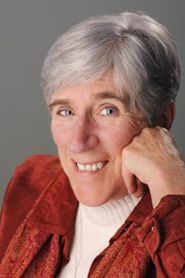
Last week I posted about my memoir writing process as part of a blog hop. I tagged three writers to post about their writing processes this week, so stop by their blogs today. Writer-editor Jeffrey Penn May  blogs all about writing and his latest book is Eight Billion Steps: My Impossible Quest For Cancer Comedy. Kristin Nador, who also dishes writer encouragements and advice on her blog, is working on a suspense novel. Mary Gottschalk has made a career out of changing careers, and has written a memoir and now her first novel (release date May 1). She is my featured guest today to avoid having her interrupt a series of posts on her blog, A Fitting Place, based on issues brought up in her novel. I enjoyed reading her introspective answers.

* * * * *
Mary-Gottschalk-Author

Mary Gottschalk –

What am I working on?

I have just completed my first novel, A Fitting Place, about a woman who finds solace in a same sex relationship after her husband of 15 years leaves her. This unexpected and passionate relationship offers an intimacy Lindsey has never known. Before long, she finds herself ensnared by the same destructive inter-personal dynamics that plagued her marriage. Unable to blame her dilemma on traditional gender roles, Lindsey is forced to look in the mirror as she seeks to define what she wants from this—or any—relationship. Freed from the straightjacket of societal notions of friend, wife, and mother, Lindsey calls on inner resources she never knew she had, as she sets out to build a new life for herself and her teenage daughter. The premise of this debut novel is that opportunities for personal growth are greatest when you step outside your comfort zone. A Fitting Place is an uplifting story of the human potential we all have.

I have now turned to marketing. In the first stage, I’m reaching out through social media as well as my own mailing list to an audience interested in literary fiction that deals with contemporary social issues, including the subject of sexual fluidity. In a second phase, I will reach out to university level programs in psychology and women’s studies as clinics that deal with family relationships and/or issues of sexual identity.

How does my work differ from others of its genre?

The premise behind both my memoir and my novel is that opportunities for personal growth are greatest when you step outside your comfort zone. From a psychological perspective, the term “comfort zone” encompasses behavior patterns formed during childhood, patterns which may not be productive or healthy in adult relationships. By stepping outside of your comfort zone—whether by choice or by circumstance—you exponentially increase the possibility of personal and professional growth. My writing is also distinctive because I like to utilize metaphors to emphasize the universal themes that underlie my stories:

Sailing Down the Moonbeam (a memoir) – Sailing is a powerful metaphor for everyday life:

  • It is impossible to control your environment, whether it’s the weather or a possible job promotion. You enjoy life much more if you recognize that your control is limited to your own thoughts and actions.
  • Very few things in life work out the way you planned. Expectations leave you vulnerable to disappointment, while living in the moment opens the door to opportunities you didn’t expect.
  • All too often, you end up in a different place that you intended to go, both in relationships and in careers. Our focus should be on the journey, not the destination.

A Fitting Place (a novel) — The metaphor in the title applies on multiple levels:

  • The Biblical notion of “right and fitting” – that some things are just meant to happen in exactly the way they do happen
  • The image of a puzzle – the idea that it takes time and experience to understand how all of the pieces of our life fit together
  • The image of a dressing room – a place where you try on different costumes. In the novel, my protagonist is “trying on” a different lifestyle.

Why do I write what I do?

I have been a risk taker most of my life, not out of an excess of personal courage, but the consequence of a high level of curiosity and low tolerance for routine and repetition. My willingness to take risks has opened some amazing doors for me, including my 3-year sailing journey at age 40 as well as the opportunity to work in several different countries and cultures. A key lesson from all of these experiences, but most particularly the sailing journey, was that control over life—and death—is largely an illusion, and you will be happiest if you focus on making each moment the best you possibly can. My goal, in writing both my memoir and my novel, was to share that lesson from different perspectives.

How does your writing process work?

Like many authors, I go through multiple drafts, but I see the process in three distinct stages.

  1. Development of the story arc. Once I have the story in my head, I will write it down in far more detail than “plot points,” but both the characters and the scenes are relatively undeveloped. After two books, I now realize this occurs because I am, by nature, logical and analytical, and need to be sure the pieces “fit together.”
  2. Developing the characters. My second draft is focused on developing the personalities of my characters—making them sympathetic, identifying opportunities for conflict and tension, and finding their idiosyncrasies. In many cases, it means adding scenes; in others, it means cutting out scenes that are really backstory.
  3. Heightening the emotion. In the third draft, I go through scene by scene, looking for ways to increase the emotional temperature, whether the scene deals with internal or external conflict.

* * * * *

Mary has tagged Sharon Lippincott, a well-known life writing resource. Stop by Sharon’s blog, The Heart and Craft of Life Writing, next week to read about her writing process.

Posted in writing, writing skills | Tagged | 11 Comments

Blog Hopping: my writing process

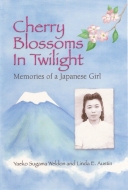
I am posting today about my writing process thanks to writer-poet Jan Morrill tagging me to answer certain questions about this as part of a blog hop. Jan is author of The Red Kimono, a novel about a Japanese-American girl interned with her family in the Rohwer, Arkansas, camp during WWII. Maybe you’d like to try to win a copy of her latest book, Life: Haiku by Haiku, by submitting a haiku on her blog during April, which is Poetry Month.

Question 1) What are you working on?

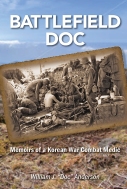
My focus is more on encouraging others to write down some of their life stories or those of their elders. I’m particularly passionate about gathering stories of our WWII generation who grew up in a near history most of us can’t imagine. Personal stories tell what really happened, what history books don’t tell or can only gloss over. Currently I’m working with a military veteran putting together his memoir of life as a medic in the Korean War. I am learning a lot from him. A horrifying lot.

Question 2) How does your work differ from others of its genre?

I pretty much stick to writing (and reading) about history and culture. I like to learn, and life is too short for all the learning I want to do. I like to work with everyday stories of everyday people. Ordinary people are special, too, and their stories are worth telling, at the least for their families. Some have been downright astonishing. I don’t write slick, commercial-interest stories. I am more of a ghostwriter and editor, so I keep the voices of the people telling their stories. They are not MFA grads, so I write their stories or clean up their work to make it read nicely and to make sure the stories have structure. I work hard not to insert my writing style into their stories. The biggest compliment I can get is that the family hears their loved one speaking in the writing and that they learned something about that person they never knew before.

Question 3) Why do you write what you do?

I like to capture personal history before it’s lost. Maybe you’ve heard how every person is a library, and when they leave this earth their library is gone. I want to save these libraries full of history, adventure, and perspective. I also think it’s important for families to keep their own history alive, to know where they came from, their traditions, and what their ancestors lived through. If one generation doesn’t care, the next might.

Question 4) How does your writing process work?

I keep myself very busy, pulled in all directions, so it’s hard to find blocks of time to write. I have a part-time job, too. I don’t have a specific time set aside each day, but my usual time for writing is at night, after supper and any chores, and often I stay up pretty late, sometimes to 3:00am. Since I work with true stories, mostly I’m just editing them and doing research to make sure they are historically and culturally correct. Typically, I work with a series of short stories. I have to edit individual stories and then figure out how to put them together in a way that makes sense. Each story needs a good beginning and a wrap-up end, and there has to be an overall beginning and ending to the series. Of course, the real author has to agree with everything I write. I go back through and edit for consistency and flow. Lots of editing!

* * * * *

Next Monday hop on over to the blogs of the writers I’ve tagged to hear their answers to these questions. (I’ll be hosting Mary Gottschalk on my blog next week since she’s in the midst of blogging a series of posts exploring issues found in her new novel.) Memoir and life writing are considered narrative nonfiction, so we can learn from writers of both nonfiction and fiction.

Jeffrey Penn May, of AskWriteFish.com, has received several short fiction awards, a Pushcart Prize nomination, and an excellent book review in the St. Louis Post-Dispatch, and he has recently published his humorous narrative Eight Billion Steps: My Impossible Quest For Cancer Comedy.

Kristin Nador, who is currently working on a contemporary suspense novel, encourages creatives to find their own unique voice at her blog, Kristin Nador Writes Anywhere, where you might find her discussing writing craft, creativity tips, or Pinkerton the Cat’s latest adventure.

Mary Gottschalk, who came to creative writing late in life, is the author of a memoir, Sailing Down the Moonbeamand a soon-to-be-released novel, A Fitting Place, about rebound relationships and stepping outside one’s comfort zone.

Posted in writing skills | Tagged | 9 Comments

Chimamanda Ngozi Adichie: On Story

Last week I went to see Chimamanda Ngozi Adichie at our local library. Her latest book, Americanah, just won the National Book Critic’s Circle (NBCC) prize for fiction. Adichie is more beloved, however, for the award-winning Half of a Yellow Sun, a novel of love set around the Biafran War (yeah, look that up). She wrote that story to “honor the collective memory of an entire nation” as well as to honor her grandfathers who died as refugees from that war. She doesn’t write memoir, but like most fiction writers she uses real experiences, real people, real culture and history to create story. As a writer, Adichie says she “feels one step away, observing and looking for story to write.”

What caught my mind about Chimamanda Adichie was her TED talk of 2009, which I found while researching prior to her author event here. Her delivery of The Danger of a Single Story is amusing but passionate, worth listening to and not just because of her beautiful way of speaking.

“Our lives, our cultures, are composed of many overlapping stories. Novelist Chimamanda Adichie tells the story of how she found her authentic cultural voice — and warns that if we hear only a single story about another person or country, we risk a critical misunderstanding.”

What does this have to do with memoir and lifewriting? For one, the characters in our lives don’t have a single story, they are three-dimensional people with perspectives based on their own experiences. Don’t make them all good or all bad (that goes for ourselves as main characters, too), and you might consider putting a bit of backstory into your characters– usually hints or short explanations, not long, distracting side stories. Why might they have acted the way they did? Second, the single story needs more stories to create a fuller picture. One person’s experiences in time and place are not representative of everyone’s in that time and place. This makes your story important to the grand drama of history and culture, or to the story of recovery and healing. Let’s write, and let’s read.

Note: The film Half of a Yellow Sun will be released this July

DSCN4951

Posted in book talk, heritage, history, lifewriting, memoir writing, writing skills | Tagged , | Leave a comment