Family history: Getting back to your roots

Today BlogHer’s Find Your Roots prompt asks, “What does getting back to your roots mean?” That makes me think about cultural heritage. “Where are you from?” was a  common question I got in the 1970s-80s when multicultural people were still an anomaly. If I answered “the Chicago area,” the response would be, “No, really.” Really, I was born in Chicago. Near the lakefront.

Usually, though, the question was worded, “What are you?”

“I’m a human being.”

“No, really.”

As an adult, I am deeply rooted in my Japanese tree even though I’ve never been to Japan (yet), don’t speak the language, and don’t know most of my relatives there. I was going through my mother’s old photo album full of her family pictures and discovered strangers who are probably my cousins. I only have two aunts, and I thought I knew who their children were. Except for those two.

I’m also interested in the Dutch side of me I know almost nothing about. But, thanks to these BlogHer prompts prompting my curiosity and to a genealogy-addicted co-worker, I learned the libraries in town give free access to Ancestry.com. So I renewed my library card and spent an hour discovering cool stuff online about my great-grandfather. Like he had a mystery wife… first she was there, then she wasn’t. My dad was told his grandmother died when he was a baby, but it doesn’t look like it … you never know what those old records will reveal.

Getting back to my roots would mean learning about my cultural heritage. I appreciate that St. Louis provides a lot of opportunities for me to not only learn about but participate in my Japanese heritage. Dutch culture in the States is harder to find, so other than eating Leiden cheese and pickled herring, I guess I’ll have to go to Holland, Michigan, again someday. My family went there when I was a child, and I got a pair of wooden shoes in my size. Those things were really painful to wear!
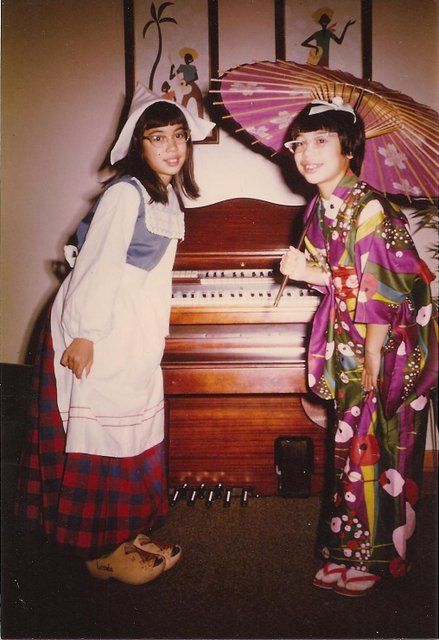
I just look like I'm smiling

I just look like I’m smiling

Posted in heritage, multicultural | Tagged | 4 Comments

Family history: Got culture? Does it show?

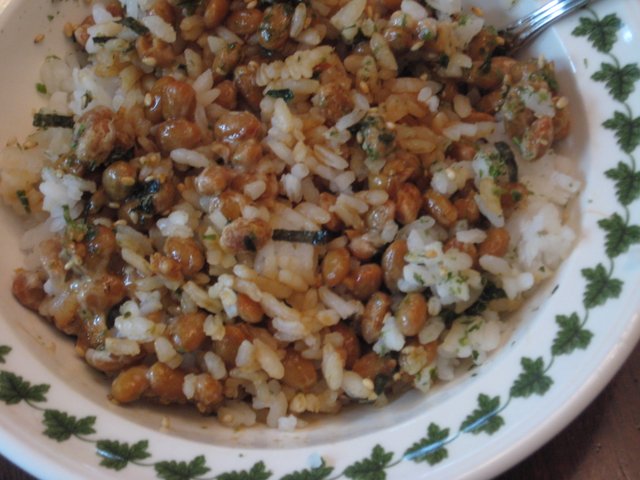
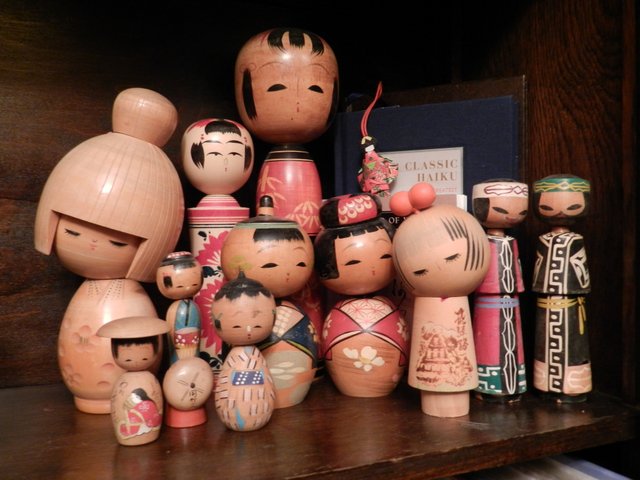
How much does your culture play in your day-to-day life? That’s BlogHer’s Find Your Roots prompt today. Well … I don’t eat sushi every day or sing enka at the karaoke bar, and I certainly don’t think like a traditional Japanese person. I am, however, surrounded by a lot of Japanese things. From kimono in the closet to cute kokeshi dolls in the dining room to decorations in the living room to loads of Japanese dishware in the cupboards, visitors would know I have a thing for Japan. I also write haiku, paint etegami, and watch Japanese movies with English subtitles. If visitors looked in my fridge, they’d see takuan (that yellow Japanese pickled radish), and the freezer holds containers of natto. Natto is for real Japanese people! Okay, well some of them hate natto. It’s good for you, though, filled with protein and vitamin K, and extra good with furikake (seaweed sprinkles).

I have embraced my “hafu-ness.” Hands down, I got culture. What about you?

Natto - just ignore the slime

Natto – just ignore the slime

kokeshi dolls - kawaii!

kokeshi dolls – kawaii!

Posted in heritage, multicultural | Tagged | 1 Comment

Passing on cultural traditions

Today’s BlogHer Find Your Roots prompt is about family traditions. Of course we in the States have our standard holidays with their traditions, with some variation by family. The only special cultural tradition I’ve kept from my childhood has to do with New Year Good Luck Foods. There are no other Dutch traditions I know of.

My Japanese side has a LOT of cultural traditions. I think the Japanese have the most holidays and celebrations of any country, but they don’t get celebrated much by Japanese in the States. I don’t know anyone here who throws roasted soybeans out the door in February for Setsubun, shouting, “Oni wa soto! Fuku wa uchi!” That  means, “Demons get out! Happiness come in!” Japanese have a thing for cleaning the house of dirt and bad spirits each year and starting fresh. I do clean the house extra well just prior to New Year’s Day, like the spring cleaning tradition in the U.S. which I suspect most people don’t follow anymore. I don’t know if my Japanese friends do this New Year cleaning anymore either, but I just can’t stop myself. Mom taught me well.

I’m fortunate to live in St. Louis where we have the annual Japanese Festival on Labor Day weekend at the Missouri Botanical Garden. MoBot has the biggest and arguably the most lovely Japanese garden in the country, and the biggest Japanese Festival. That’s when everyone becomes part Japanese. People of all races are seen wearing yukata, the cotton summer kimono which are sold by a vendor there. We dance around the yagura, a raised stage holding a singer/leader and taiko drummers. This folk dancing is done as part of the annual Obon festival, where in Japan the people welcome back the spirits of deceased ancestors for a few days. There is so much going on at our St. Louis festival, like a crash course in all things Japanese. My mother dearly loved it because it made her feel she was back in Japan. You can see my video of the St. Louis Japanese Festival on YouTube. Especially now that my mother is gone, I have to keep up the tradition of bon dancing, or bon odori. Tsukiga … deta deta ….

Tossing mist during a "Tanabata" Star Festival storytelling

Tossing mist during a “Tanabata” Star Festival storytelling

Posted in heritage, traditions | Tagged , , | 2 Comments