Karen Fisher-Alaniz discovered a secret. On her father’s 81st birthday, he handed her a stack of letters he had written to his parents when he served in WWII. She had heard some old war stories, but they didn’t explain why he was suffering nightmares and flashbacks. He had a safe desk job during the War, and that was all, or was it?
Karen’s book, Breaking the Code: A Father’s Secret, A Daughter’s Journey, and the Question That Changed Everything, was just released by Sourcebooks, a large independent publishing house. It is beautifully done with personal photos and scans of letters and documents. I felt I was alongside Karen as she undertook this difficult journey of discovery with someone who did not want to talk about his past. Karen is in the midst of a flurry of publicity, so I’m fortunate she was able to answer a few questions for me.
*****
Karen, your dad began to suffer from PTSD only after the September 11 tragedy. Is this what triggered you to dig for more of his WWII experiences?
Yes. It was about six months after 9/11 when he put two notebooks full of letters he’d written during the War on my lap. I do believe that our nation’s tragedy was a trigger, but nothing was said at the time. It’s only in looking back that my mother and I have wondered about it. And then the nightmares and terrible flashbacks began. I just wanted to help him – that’show it began; a daughter trying to help her father.
When you retired from your teaching career, you had time to sit with your dad more and go out for breakfasts with him, trying to work through the PTSD. He didn’t want to talk about his war experiences. How did you break through the barrier?
Time. Lots and lots of time. It’s funny that as my dad was slowly telling me the stories, I was simultaneously trying to figure out what I was going to do with the rest of my life. I really loved my teaching job. I’d taught special education for 14 years. If it weren’t for health problems, I’d still be there. I was devastated when I had to leave “my kids.” I’ve heard that if you want to hear God laugh, tell Him your plans. And that’s what this was like. Looking back now, I think it’s funny that I didn’t see that I was already on the path to doing something that would begin a new chapter in my life –writing.
Anyone who has a loved one with post-traumatic stress disorder knows the tightrope you walk. I felt like talking about his experiences would help him, but at the same time, sometimes it would kick up memories that would be triggers to nightmares and flashbacks. So, I had to learn when to back off and when to push. I don’t think you can ever get that one completely right.
What made you decide to write a book, and did you know from the start you wanted it to be for the public, not just your family? And what did your dad think about you writing this book about his life for everyone to see?
In the beginning, I was simply going to transcribe the letters. There were 400 pages of them and they were hard to read. I just wanted to type them up. But as I read his story, through the letters, I had questions. Those questions lead to me finally hearing the true story of my father’s experiences during the War.
It was such a slow process that it didn’t really feel like there was a time that I said, “Aha! I am going to write a book!” Dad was just going with the flow. I started to write down the story that wasn’t in the letters, the story between the lines. Dad is kind of still just going with the flow. When the book was finally about to come out, he said he was going to find a rock to crawl under.
I know you had a dilemma about how to write the story. You could have ghost-written it for your dad, or written it like a biography from third-person perspective. Tell us about the route you took.
Well, I originally wrote it in third person, more like a biography. I joined a critique group and began taking chapters to the group. After several weeks of doing this, one of the ladies in the group said, “Karen,every time you come, we critique the chapters and then you tell us how the experience is effecting you. Have you ever considered that this is your story too?” I hadn’t. But I did then. And the members of the group were always so interested in the story, always anxious to learn more. That made me wonder if perhaps the story had an audience outside of my immediate family.
You ended up with a lot of stories, but not all were included in the book. It’s natural to want to include everything for a memoir so as not to lose anything, but if publishing for the public you have to hold back. How hard was that to make those decisions? What did you do with the stories left out?
You are so right. Publishing for family is one thing. Publishing for readers who don’t know you is quite another. Although, I would also like to say that perhaps if we put as much time and effort into making our family history interesting (and well written), maybe other people would be reading them.
Editing things out of the story was very difficult. I thought I’d done an okay job of it until I had an editor at Sourcebooks working wit hme. Editor Peter Lynch was wonderful to work with. He had a good vision for the story I wanted to tell and a gentle way of guiding me toward what needed to be done. When it’s your story, you do have a tendency to believe that everything is important and relevant. But it’s not. The story must move forward. If you put too much in, you will lead the reader down rabbit trails and confuse them.I constantly asked myself, “Does this matter to the reader? Does it tell a part of the story? Does it move the story forward?” If the answer was no, then it had to be cut. I have a file of additional letters and stories that didn’t make that cut.
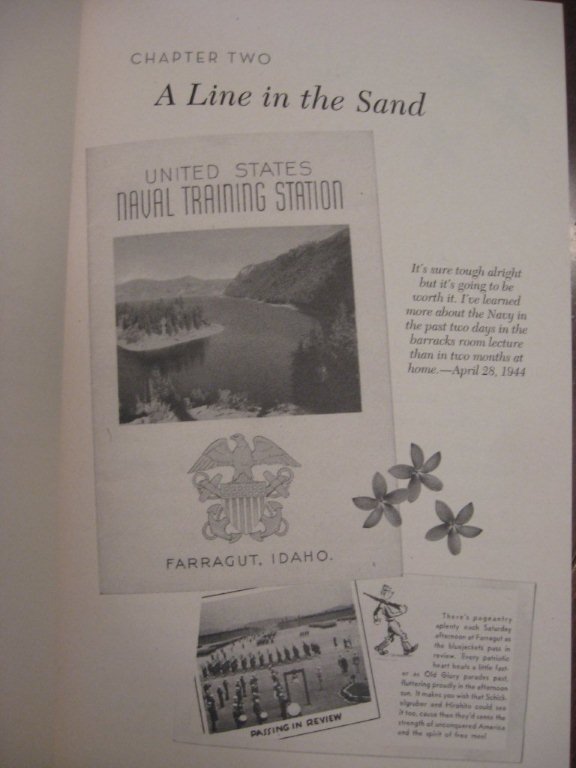
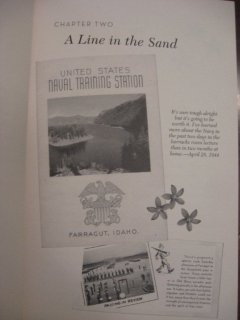 Did you include photos or other types of extra material in the book? Did you need to do much research?
The team at Sourcebook really caught the vision for the book. I gave them photos and memorabilia but never expected them to use much of it. But they did. Each chapter has not only the original letters, but photos and memorabilia in it. It’s arranged in an amazing fashion. Everything about the book and how it’s laid out and what is included sets the stage for the story. It was really a beautiful experience to see what they’d done. I cried.
Your dad has been to book-signings with you and you both were interviewed for a spot on NPR. Heseems to be taking it all in stride—what does he think about all this fuss over him?
I think he’d still like to find that rock at times. He is 90 years old now and yes, he’s doing some of the signings with me. I swear he gets younger and more energized with each one. People who come out are so kind and honor him. He fretted over what to write when he signs a book. He’s settled on “and her dad, Murray Fisher” below my name. But he’s also a humble man. He survived the war. His friend, Mal, didn’t. He never forgets that. There are still times when I see that cloud of grief come over him.
Anything else you’d like to tell us about the book or the journey of writing the book?
I’d rather spend time reminding people how precious the gift of time is. When Dad and I started going out for breakfast, nine years ago, I never dreamed the story that would come from it. It was only an hour or so oftime, once a week. And yet, that time together became so important – to both of us. We all have stories in our families, in our neighborhoods or places of worship that haven’t yet been told. Or maybe the short version has been told. We have a tendency to think, I’ve got to write that down someday. Someday, I’ll sit down with Grandpa or Auntie and record that story. But the reality is that for many, time runs out. Once your loved one is gone, so are their stories. None of us are promised tomorrow. With the holiday season upon us, make a promise to yourself to slow down and listen. I will too.
Thank you for inviting me to your blog. Happy Holidays!
*****
Look for more information about Breaking the Code and Karen Fisher-Alaniz (Ah-lah-neez) at her website, StoryMatters2. Karen and I encourage everyone to talk to veterans and ask them about their lives. Many veterans such as Karen’s dad are reticent for various reasons to talk about their service, but it’s important to ask. Telling the stories can be painful, but also healing, and can validate the importance of what they did for their country. Don’t let them pass away thinking, as one elderly veteran told Karen, “I have a story, too, but nobody wants to know it.”






 moonbridgebooks