Have memoirs put biographies on the endangered species list?

British author Hilary Spurling just won the James Tait Black award for her “part biography” of Pearl Buck, Burying the Bones: Pearl Buck in China. In the U.S., the title is Pearl Buck in China: Journey to the Good Earth. Spurling’s book, at 320 pages is said to focus mainly on how Buck became a prolific writer and ignores most of her life in the U.S. until her death. This is rather interesting as usually a biography is comprehensive, like an autobiography. Even more interesting is that Spurling agrees with top British biographer Michael Holroyd that biography is out of style. Holroyd says the genre has been “subsumed into life writing,” and I agree with him.

Memoir has really hit its stride, especially due to technology advances that allow for more affordable self-publishing and good digital print quality. The generally cold, factual biography has been overcome by the warmth of personal stories straight from the horse’s mouth, so to speak. Also, biographies tend to be about VIPs, not ordinary Joe’s like me and probably you. I think it depends on the person, and perhaps less people these days are that interested in reading a history book about a political figure, the usual biography topic. With our entertainment, short-attention-span culture, many prefer the shorter and get-to-the-interesting part focus of memoir. Plus, if you’re famous, why not write it your way and before you’re dead? Holroyd wrote his own memoir in 1999, and his most recent biography, Book of Secrets, of three not-so-famous women connected with one house, uses bits of memoir, and he has inserted himself into the story, experimenting with ways to keep biography interesting to the public.

I don’t remember the last biography I read since I devoured them in elementary and middle school, although now I’m tempted to go after one of Pearl Buck. I loved and cried over The Good Earth and should read more of Buck’s over 100 works. She had quite a life. Do you read biographies?

Book review by Stacy Schiff of The New York Times.

Posted in book talk, history | 5 Comments

Boyd Lemon: Daring to dig deep to write a divorce memoir

Boyd Lemon is a very brave man. I have just finished his memoir, Digging Deep: A Writer Uncovers His Marriages, where he studies the failures of his three marriages and his role in their collapses. Not only does he dive to the bottom of his psyche, he writes very personal details of his thoughts, perspectives, expectations – and worse – his experiences of sex and drugs (usually involving a wife). Heavens! But Boyd dares to expose all in his quest for understanding and in his desire to help others, especially those who grew up in the same era he did, on the cusp of the immense social changes of the 60s and 70s. Boyd manages to objectively examine his own beliefs and behaviors instead of playing the blame game or exacting written revenge on his ex-wives. [Very Important: do not write your memoir until any anger you have against others you include in your story has cooled off.]

Sharon Lippincott, author of The Heart and Craft of Lifestory Writing, interviewed Boyd Lemon about the delicate subject of how his ex-wives viewed his memoir exposing them to the world. Since Boyd was a lawyer most of his life, he probably had more clue than the rest of us about how not to get sued for writing unflattering things about others, but he is very generous with and respectful of his ex-spouses, knowing that neither they nor he was perfect and trying to understand their perspectives. Digging Deep is well worth reading, especially for middle-aged and older readers who will undoubtedly recognize some of their own foibles in the pages, and for those who plan to write about their own difficult relationships.

One last observation: Digging Deep uses an unconventional and innovative literary tactic of using present tense as Boyd writes and experiences the frustrations of writing his memoir, then switches to past tense to tell the actual stories of his marriages. The tenses/timeframes are separated by three centered asterisks to help the reader transition. It works brilliantly. And Boyd writes very well, interspersing lovely prose in his eye-opening stories. You shouldn’t get bored. (Warning: sexual details, but never gratuitous).

Digging Deep is available in print through online book sellers, in most e-book formats through Smashwords, or via the Boyd Lemon author website. Boyd also has a Divorce Recovery Resource website.

The Heart and Craft of Lifestory Writing: How to Transform Memories Into Meaningful Stories

Linda Austin
"Cherry Blossoms in Twilight"
http://www.moonbridgebooks.com

Posted in bad memories, book reviews, book talk, writing | 4 Comments

The 2011 bad first line contest winners and your memoir

The Bulwer-Litton Fiction Contest winners for 2011 have been chosen, and the grand prize inflictor’s entry is rather disgusting. There was no memoir category (what!?), but the winner’s entry will do. This contest picks the worst first line of a (fake) novel submitted, as follows:

“Cheryl’s mind turned like the vanes of a wind-powered turbine, chopping her sparrow-like thoughts into bloody pieces that fell onto a growing pile of forgotten memories.” – Sue Fondrie

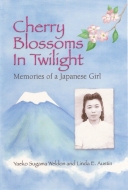
I hope you can tell this is bad. Bad, ugly metaphor reminds me of the movie Fargo. It’s good to use metaphor (and simile) in your lifewriting, but not ones about sparrows getting chopped up, unless it is a horror memoir. What makes the Bulwer-Litton contest ironic is that the first sentence of any book is supposed to be catching, to lure the reader into going further. And these winning lines certainly are catching, just in the wrong way. After you have written a few drafts of a short lifestory or memoir, take a look at the beginning paragraph. Can you rewrite or tweak it or even start out the book differently to hint at what is coming later in the story so readers are intrigued and want to continue? In my mother’s WWII Japan memoir, Cherry Blossoms in Twilight, I put the intrigue at the end of the first paragraph describing a peaceful view from the house: “I could not imagine then how this peace would be broken.”

Here are a few other first lines or last lines of first paragraphs of memoirs that I liked:

“I guess the reason I am still here today to tell my story is because I come from a long line of survivors” (Laughter Wasn’t Rationed by Dorothea von Schwanenflugel Lawson)

“I left the South so long ago, never to return, never looking back to allow yesterday to flood on in.” (Suitcase Full of Dreams by Hoy Kersh)

“To those who are still with me, I can only say one thing: thank God for the foolhardy.” (Hippie From Iowa by Michael Sieleman)

“This is the one thing that stays the same: my husband got hurt.” (A Three Dog Life by Abigail Thomas)

Now, it is not absolutely necessary to have a snappy one-line in the beginning. Rick Skwiot in his memoir, San Miguel de Allende, Mexico starts with him snapping his ankle during a basketball game. Mary Karr starts out The Liars’ Club with a doctor examining her seven-year-old self after a rape. Other authors start out by telling a short story told to them by their mother, launching into a description of another time and place, or introducing an interesting character in an interesting way – here’s Elie Wiesel’s Night :

“They called him Moishe the Beadle, as if his entire life he never had a surname.”

Wiesel goes on to tell how Moishe is different from the other Jews and how Wiesel met this significant teacher in his life.

The writing of a good first paragraph can be stressful, but don’t sweat it. If it doesn’t come to you early, save it for last, after you get an idea of what the whole book will be about. Play around with it, dream about it, read other memoir beginnings, run drafts by your family and friends. As usual, if you are writing for your family it is not as important, but if writing for publication, that’s a different story.

Posted in writing skills | 2 Comments