Flash memoir: a memory episode

Flash memoir is an exciting concept related to flash fiction, which is not a new writing form but now has a catchy name and has become popular. Short stories are in the range of 3000-5000 words. Flash fiction is even shorter – no strict limit unless there are contest rules, but generally 300-1000 words. Micro fiction is a few to 300 words. Recall Ernest Hemingway’s legendary six-word story: “For sale: baby shoes, never worn.” You don’t hear about it much, but short stories, flash and micro fiction can easily be adapted to life writing. Call it flash memoir.

Writing an entire memoir is daunting, requiring a lot of time, at least some writing talent to avoid boring readers, and organizational skills. Life writing is easier when it encompasses short stories, flash memoir and even poetry. Cut way back on the time and organizational skills, but it’s still nice to learn some basic writing skills (a future blogpost).

Writing short is much easier than writing long. Or is it? I’ve been taking an online class on writing flash fiction/memoir, through Story Circle Network, to brush up my short-writing skills and to learn how to adapt flash to true stories. The latter is easy, but good short-writing is not so easy. You must skimp on words but still create the essence of the story, providing a beginning hook to grab reader interest, then break into the guts of the scene, and end with a wrap-up. Novice writers should not be frightened, but should write their true short story or flash drafts as best they can. It’s the rewrites that are hell!

When you write short you must strip out all the babble—the extraneous thoughts, chatter, anything that isn’t directly a part of the story line or isn’t directly related to establishing a character personality. This is true for any story, but especially so for shorts. The chatty stuff can distract the reader. Think as a storyteller: what can I say in the beginning to grab interest, and what can I say at the end as a finishing thought. Often flash fiction ends with a twist—a clever, thoughtful line or perhaps a different perspective or a new understanding. The surprise isn’t necessary, but try to give your story a point—usually, what did you (or someone in your story) learn or come away with. If you can say this in a funny or a poignant way, extra points for you!

See Flash Fiction Online for some examples, and imagine how you can use this style for your own real life stories.

Search Amazon.com for Flash Fiction

Posted in memoir writing, writing skills | 2 Comments

The last memories

Mom has been unusually calm these days. She has been a fighter against her Alzheimer’s, not going easily into the twilight world of forgetfulness and unable to accept her greatly diminishing physical abilities, so her peacefulness is a surprise. I am so happy she now allows me to take care of her, to sit outside watching the moon with her, to tuck her in bed with a kiss, without fussing and worrying about the horrors of old age. “Who said this is the ‘golden age,’” was her mantra.

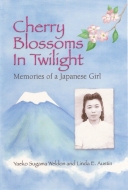
There’s not much to say when I visit—since I come so often, there’s not much news, and I don’t like repeating myself endlessly anyway—but she loves my presence beside her. It makes her feel safe, despite the fact that those who work there are loving caregivers. The one thing she does remember that we can talk about together is her childhood. Thankfully, since I’ve written her stories into a book, I now know those stories better than she does so I can prompt her memories as well as join in.

Last night, sitting outside in the evening, Mom sang a Japanese children’s lullaby to the moon, over and over—the one I sing to her after I tuck the quilt around her at bedtime. “Mikazuki-sama, konban wa.” Today she talked about the old festivals of Japan. She sang an old folk song (again and again), swaying her hands to movements half-remembered. I stood up and did the beginning of the dance for her, the only part I could remember.

I’m so glad I have her old memories written down. And it is so beautiful to wrap the memories around us, holding us together as one. I think we are both at peace now, ready to face the future.

Note: this post was inspired by an article by Julie Redstone on Yvonne Perry’s blog, More Than Meets the Eye. The article is entitled The Challenge of Death and Dying – Caring for Aging Parents.

Posted in capturing memories | 7 Comments

Message Memoir vs Self Indulgence

The best memoirs are written with purpose. While a memoir may contain musings to one’s self, as in a journal, an outstanding memoir is directed at others and contains some kind of message that pushes it beyond just a book of facts, or a waterfall of feelings, to something rewarding. It gives readers a “take-away.” What are you trying to say to them? What are you leaving them with? Perhaps it is a better understanding of history, a culture, a disease, a trauma, or why you are the way you are.

http://rcm.amazon.com/e/cm?t=cherrybloss03-20&o=1&p=8&l=bpl&asins=1552786781&fc1=000000&IS2=1&lt1=_blank&m=amazon&lc1=0000FF&bc1=000000&bg1=FFFFFF&f=ifrHeather Summerhayes Cariou has written Sixtyfive Roses, a memoir about her younger sister’s struggle with cystic fibrosis. Heather could have documented with bland facts her sister’s lengthy suffering and eventual death, or whined about her own feelings of pain and perhaps neglect. Instead she reached into this sad story, pulled out the message, and shared it. Readers learn about a disease and its impact on a family, and are inspired by a brave girl who made her sister stronger. Heather covers all bases.

Reading My Sister Pam, posted on the Handprints on My Heart blog, I found so much going on in this short essay related to the book. Note how facts mesh with feelings and reactions, “I descended into a caldron of resentment, sorrow and anger.” Note the way she effectively describes Pam to let us know she was talented, and uses a story to illustrate how she was a realist—“Oral Roberts can’t make me better.” She gives us Pam’s words of frustration, and finally a message from Pam that she shares with her world of readers. We get an inspiring take-away.

Few of us are as good a writer as Heather, and many of us do not have big stories to tell, but everyone is a writer with interesting stories of themselves and the world around them. We can learn the basics and aspire to be better writers, but being good is not necessary to write for our beloved family and friends. Write your story, but keep in mind the future generations of your family—or the strangers—you are writing to and tell them something interesting about who you are, what you experienced, and what you learned. Memoir can be merely a self-indulgent tale of me-me-me, but it can also be a lesson in history and life—your history and life.

Posted in memoir writing, writing skills | 2 Comments