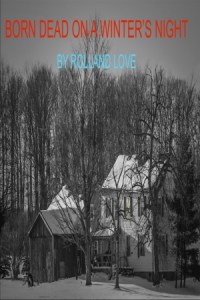
In a Facebook group, I discovered Rolland Love and his memoir, Born Dead on a Winter’s Night. How can you not want to check out a book with that title! Inside, I found delightful tales of growing up in the Missouri Ozarks back in the day, which would be in the 1940s and 50s or so, when kids were free to be.
 When looking up advice and information on how to write memoir, you usually find articles about how you’ve got to have some major conflict and how you dealt with that—like writing a novel. Not everyone has one big story of conflict resolution, and I think most people who are not used to writing would be completely intimidated to write about their life like that. Most people, however, have plenty of little stories about their lives that are entertaining or otherwise interesting due to the history, culture, or societal mores of the time. I like such stories, and I love hearing what life was like in the past and in different cultures or regions.
I asked Rolland Love some questions about writing and about Born Dead on a Winter’s Night, and I hope his answers and his book inspire others to write their collection of stories. Writing just for family, for them to remember you by and even learn some history from, is not difficult. Just write as though you are talking to a new friend. If you want to sell to strangers, though, you will need to read up on how to write well and how to publish and market your book–not so easy.
* * * * * * *
Rolland, you have written a lot of books that are collections of your stories. What inspired you to write them, and why did you think strangers would like to read them?
I became inspired to write while living on a spring fed river in the Ozark Mountains when I was 15 years old and helping my uncle run a fishing camp. I spent endless hours sitting around a campfire listening to an old moonshiner who lived downstream tell stories. He was known as one of the best storytellers around. After spending my summer absorbing good old boy Art’s natural ability to spin tales and experiencing all that nature had to offer, I gained a natural flow of how to put words on paper.
What is your writing background, and what advice do you have about writing short stories to make them interesting to others? I do love the poetic descriptions you use, especially with the beautiful Ozark scenery.
The first book I wrote was an Apple computer software directory detailing where to find software for the Apple 11. That was long ago in 1980. I was inspired to spend six months of hard labor on the project after meeting Steve Jobs at an electronic consumer show in Las Vegas. The book had 1,000 pages and sold over 100,000 copies without me spending a penny on advertising. One of those right things at the right time.
After that and over the years, I have written 50 short stories about assorted happenings. The Ozarks, dogs, snakes, people I have known over the years, scary stuff, funny stuff, and most recently a story about a raindrop that becomes one of Mother Natures mystical best friends.
I loved writing Born Dead on a Winter’s Night, always interesting to relive your past. My favorite novels are Blue Hole and River’s Edge. If readers check out the reviews they will find endless comments about the stories being scary, scary, scary! However, like all of my stories they end well, which takes some doing after murders and mystical happenings in the deep, dark woods in the Ozarks.
I like how you use a lot of dialogue, which makes your stories come alive. Of course, you couldn’t have remembered exact conversations. Do you think dialogue is important, and are there any considerations about making it up?
A steady flow of dialogue is super important unless the writer wants to play like they are having a conversation with tree. There are a couple of things I do that help add interest for the reader. I simply play like I’m watching a movie in my mind and having a conversation with my characters, and periodically I back myself into a corner and force myself to write my way out.
Your short chapters each have a theme and generally flow by time, but one chapter can actually cover several very short stories or anecdotes from different time frames, and some chapters jump backward in time. Do you have any advice about which stories to include?
Especially the stories set in the Ozarks are simply reliving my past. As I mentioned above, movies in my mind lend a lot to what I type.
* * * * * * * *
Anyone who wants to write memoir should read memoirs to get ideas of how and what to write and how to structure the book. I highly recommend Born Dead on a Winter’s Night for those who just want to write about their smaller adventures and anecdotes and tell what life was like during their younger days. Roland’s stories could use better editing, but they have homespun charm, are fun and personable, and are beautifully descriptive without the descriptions bogging down the stories. He has had some astonishing adventures and has faced tragedies. Enjoy reading about outhouse excitement and how he went fishing for chickens, feel bad for Grandpa and the hog, and laugh out loud at Zig the not-so-good bird dog. But the snakes – eww! Reviewers have compared Rolland’s storytelling with Mark Twain’s and I can see why.
Rolland Love, besides being the author of many books, presents workshops on journaling, writing, storytelling, and life history. Many of his workshops have been for children who then interview their parents and grandparents and write their stories. Rolland has created monologues and performed as historical characters, and he wrote a play about Lewis & Clark. For more information visit his website, Ozark Mountain Stories.