“Imagine being a sixteen year old boy, walking across Europe and leaving your whole family behind. Imagine being a young girl, the poor daughter of immigrants, trying to bridge the gap between your parents and the world they now live in.”
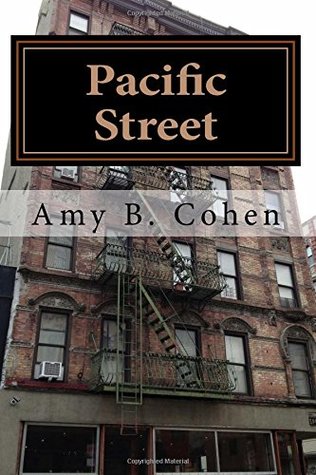
The above is from cover copy of Amy Cohen’s new book, Pacific Street. What was life like for immigrants coming to America in waves back in the 1800s and early 1900s? I discovered my Dutch ancestors were a hard-scrabble lot hoping for a better life in the US, a common story. Whether it was better here is debatable, but their journeys helped make me who I am today.
Sharon Lippincott, of The Heart and Craft of Lifewriting, gave a shoutout on Facebook for Amy Cohen and her historical novel, Pacific Street. This is Amy’s first book, and what I read on Amazon’s Search Inside was well-written and made me excited to ask her to be a guest on my blog. She had researched her immigrant ancestors and decided to write about them as historical fiction. Why? Let’s find out. . .
* * * * *
Amy, what got you started on documenting your family history?
When my first grandson was born in 2010, I realized that he was the next link in a long chain of generations. It made me think about my own mortality, and it made me wonder about all those who came before me. I knew almost nothing about them, and I realized that someday my grandchildren and their children might want to know their history. I started slowly at first, got frustrated, came back two years later with a mentor to guide me, and have been pursuing my family history with a passion since then.
Where did you find the stories of your ancestors, versus just genealogy names?
The stories came from numerous sources. Sometimes from family members, sometimes from newspaper stories, and sometimes from memoirs and letters written by family members long ago. Also, it is often possible to piece together stories from records such as birth, marriage and death records, census records, military records, and immigration records.
What made you decide to write a novel instead of a family history book?
I first recorded my research only on Ancestry.com, but then in October 2013 I was encouraged to start a blog by a second cousin whom I had recently found. She helped me set up the blog, and from there I started telling the stories I uncovered through my research. But those stories did not follow a specific sequence, nor were they very accessible for someone who wanted the big picture of one family group.
I wanted to write something that would tell a complete story in a format that would be enjoyable even to someone without an interest in my family or in genealogy. Again, my grandsons were my inspiration. I thought that if I wrote the story about my grandparents, their great-great-great-grandparents, as a novel, focusing on their childhood and young adult years, it might be a book that they would read on their own as young adults. Since they are now only three and seven, whether that happens remains to be seen! But many others have read the book and enjoyed it. That is very rewarding to me.
Is there a message you hope readers get from your book?
The novel tells the story of my maternal grandparents from 1899 through 1915. My grandfather was born in Romania in 1888 and walked out of the country to escape oppression and anti-Semitism in 1904 when he was just sixteen. He settled in New York City, living alone until the rest of his family arrived in 1910. My grandmother was born in 1895 in New York City to poor immigrant parents from Poland; her father died when she was just five years old. Somehow these two poor young people, neither of whom had a high school education, managed to survive in New York City. How they matured and handled adversity is a theme of the novel. It is also a story of hope against all odds, a story about families and love. It is the story of all of us who descended from immigrants—those came to America seeking a better life.
Is there anything else you’d like to say about this genealogy/writing journey?
When I started dabbling in family history back in 2010, I had no idea that it would become such a passion. The research is challenging and keeps my brain working, the writing satisfies my creative impulses, and the contact with newly found relatives and other genealogists is rewarding emotionally. More importantly, I feel like I am doing something meaningful by recording this history—in many ways, a history that we all share. The people I’ve learned about fascinate me. They overcame so many challenges, and they made it possible for me and my children and my grandchildren to live good lives. Without their courage and their sacrifices, I would not exist. In some ways I feel it is my duty to honor them by telling their stories. It is the least I can do to thank them all.
* * * * *
My thanks to Amy for this beautiful story, and I hope she has inspired you to start or continue writing your ancestors’ stories. Please take a look at her book, Pacific Street. It is on my To-Be-Read list now. If you read it, be sure to leave her an honest review—especially for independent authors, reviews pave the street with gold.