Some stories need to be shouted out loud

What a week it’s been. Besides the ugly news headlines that appear regularly these days, we’ve had the annual remembrances of the terrible suffering caused by the atomic bombings of Hiroshima and Nagasaki. As controversial as the bombings were, we can all agree that war causes great suffering for civilians caught up in it. Gen. Leslie Groves, director of the Manhattan Project, which developed the atomic bombs, was so wrong when he said death by the bombs was “without undue suffering” and “a very pleasant way to die.” At what point does the extent of suffering become a war crime?

Today, on August 9, besides being the anniversary of Nagasaki’s incineration, the world remembers another controversial event—the death of Michael Brown of Ferguson, the now infamous little suburb of St. Louis. Regardless of what Mike Brown did or did not do to result in his death, we should all agree that African-Americans in the US still face discrimination and too many become lost by living amidst despairing poverty. At what point does the extent of suffering become a war cry?

St. Louis is still struggling with the results of Mike Brown’s battle cry. His story was a shout out loud that forced us to listen and think, to argue but hopefully learn something about ourselves, and maybe even to step out of our bubbles and actively work for a better world. Someone I love, a Caucasian-American mother of bi-racial children here, has her own stories to tell. With her permission, I am including this message she posted on Facebook this morning:

* * *

I can’t sleep … It’s 4:00 in the morning on the anniversary of Michael Brown’s death, and I can’t sleep. The weight of having a sweet, hardworking, smart and kind, but black husband and two loving, free spirited, happy but caramel babies has hit me like a ton of bricks. It has been coming. When we were first dating at 16, babies ourselves, and people would say, “but I worry about your kids.” Or when a client I was working with would notice the picture of my husband and I gazing into each other’s eyes on our wedding day and say, “but your husband is different.” Or just the other day when I had a brief conversation with a sweet mom, who has heard these same words, and now worries about sending her children to the elementary school I went to and that we recently moved near so my children could attend, because there are no other black kids in this part of the district. Or when a lady tells me she feels like she’s living in Ferguson because there were more black people at her gas station, having no idea the man I call home could have been filling up that day. When someone argues, “All lives matter.” I’m awake. I see it. And it’s exhausting. I do not know if we are brave enough to “be the change you wish to see in the world,” but we’re rolling, full steam ahead. Let’s do this thing.

* * * * * * *

For a beautifully painted story that focuses on hope and healing and is suitable for all ages, you may like the book Painting for Peace in Ferguson by Carol Swartout Klein, an artist who grew up in Ferguson, Missouri.

Painting-for-peace-in-Ferguson-bookcover

Show us how through care and goodness
fear will die and hope increase.

-from the hymn “For the Healing of the Nations,” words by Fred Kaan

Posted in bad memories, heritage, history | Tagged , , | 7 Comments

Editing and the strategic marketing plan for your book

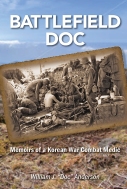
Battlefield Doc is now with the (real) editor! Nearing the end of a three-year slow journey, this collection of stories by a Korean War medic on the front lines of hell has been occupying my time lately in the big push to publish this November. That month holds Veteran’s Day and is National Lifewriting Month. I am thinking ahead for marketing purposes, to hook into these special occasions. Marketing is a plan, not a last-minute thought.

This morning I spent three hours at a strategic planning meeting for a nonprofit looking for more members and corporate sponsorship. Our facilitators described something like the business plans I am used to creating for book writing and marketing. What is the group’s mission (purpose of the book) and the most important strategic goals to help accomplish this mission (overall objectives needed to reach your specific readers). What are the benefits of being part of your group (why would somebody want to read your book). What initiatives (specific tactics) will you use to reach those goals (readers). Most writers don’t want to think about this, but they should after the first draft is completed or even before starting to write. Answering these questions can help focus the book to its audience and let you add things to the story that will help sell it. This is vital for nonfiction writers, including narrative nonfic writers (memoir authors). Even if your memoir is only for family, you want to consider the specific purpose of the book and what will interest your family.

Battlefield Doc: Memoirs of a Korean War Combat Medic is about the real life experiences of our soldiers beating back waves of enemy (and forced civilians) and how combat medics went with them trying to save lives. I have to target readers who want to know details of grunt soldier’s lives, so nobody leaves a bad review because we didn’t include what President Truman did or didn’t do or how awful General McArthur was at that time. Enough books exist about the history and politics of the Korean War, we want to offer something new. A business (strategic) plan helps identify how your book can stand out in the crowd.

As for editing, I am a ferocious editor, but this book was extremely difficult to put together from a stack of handwritten journal notes, the stories separated and with no dates. My veteran friend and I have picked the manuscript to pieces, so we both are blind to errors now. Our eyes see what they want to, not what is. I sent the “final” draft to the editor and also gave a copy to a friend who loves military stories. She is my beta reader (test reader). Within hours she had suggestions to make the important intro chapter read better (no typos—yay!). Never underestimate the importance of a second (and third) pair of eyes.

What is the purpose of your memoir? Why are you writing it and what will readers get from it?

Posted in memoir writing | Tagged | 1 Comment

A picture paints a thousand words – a memoir of travel and art

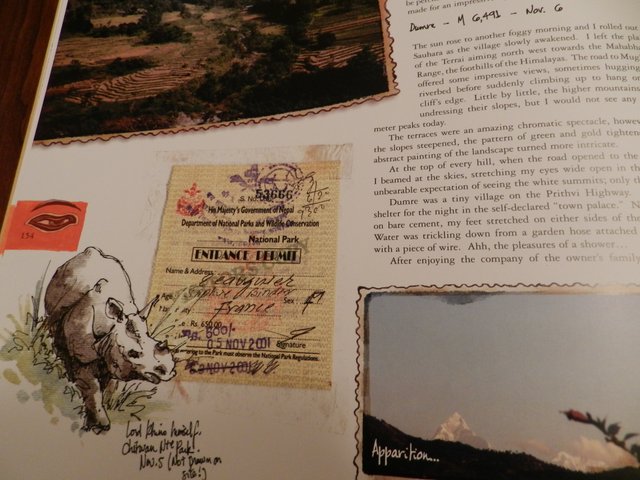
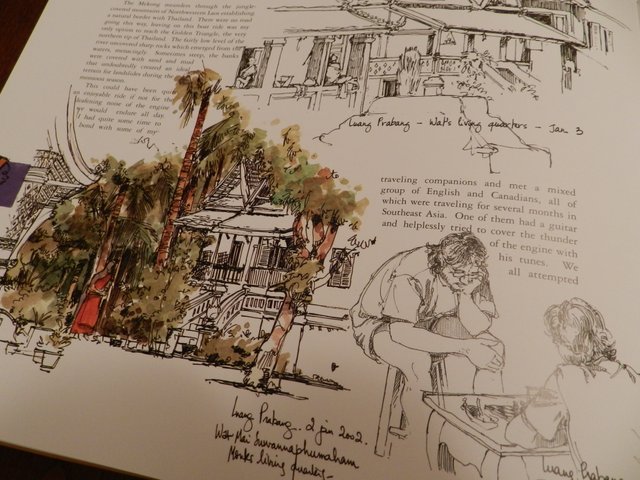
Memories can be captured in art as well as words. Sophie Binder is a freelance designer/illustrator who left her job and home in St. Louis, Missouri, to go on a solo bicycle trip around the world. Fourteen months and 14,000 miles later, she returned, having pedaled through sixteen countries, including her birth country France, and Turkey, Syria, Egypt, India, Nepal, and Vietnam. Traveling by bicycle at her own pace allowed her to spend time sketching and to be led by curiosity instead of schedule. She kept a journal and filled seven sketchbooks. “The memories for me are physical. I look at the paintings and sketches and remember the weather, what was going on, the old man who sat down next to me. The sketches retain memories.”

Sophie BinderYears later, Sophie published The World, Two Wheels and a Sketchbook, documenting her epic journey in words and more than 600 in situ works of art. A few weeks ago, she spoke about her trip to a full house audience at a local library. A natural storyteller, Sophie, had everyone laughing at the anecdotes she told about the people she met and the difficulties she encountered. While she saw impressive sights, she was most interested in the people she met. “It is very easy to judge from the background you have, from what you were born to, what you are used to. You don’t have the whole story,” she says. “I learned to step back and refrain from judging too much.”

Since no publisher would take on a big, full color book by a non-famous person, Sophie published the book herself. Using her graphic design talents, she laid out the interior and created the cover. The 280-page plus book combines stories and commentary using typed text and copies of handwritten journal notes, and is full of sketches, watercolor paintings, photos, and ephemera. Sophie’s art (and layout) is beautiful – I will let the photos here do the talking. Because of the cost of printing, she does not make much money from the book, but it is her labor of love and I think the book is gorgeous, well-written, fascinating and amusing, and worth every penny. I and many others at the library event could not resist buying a copy.

Buy The World, Two Wheels, and a Sketchbook or learn more about it on Sophie Binder’s website.

Sophie Binder

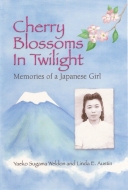
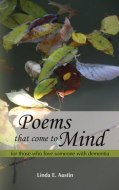
While I don’t recommend the average person try to create a masterpiece like Sophie’s, I do encourage anyone with artistic talents to include copies of sketches or paintings in their memoir.  My mother sketched as she told me her stories, and I included those in the print copy of Cherry Blossoms in Twilight about WWII Japan. Poems That Come to Mind about dementia caregiving has some of my own sumi-ink art. These are in black and white, but full color printing is now an affordable possibility IF the book is not too long and IF coffee-table-book art quality is not required. Lulu.com actually does a good job with color interior, but I don’t generally recommend them for public sales (see my article on publishing with Lulu and color printing with Lulu). Amazon CreateSpace and Ingram Spark both do a decent job with color interior, but always get a print copy color proof before giving the green light to publish. If the color is off, ask your interior or graphic designer for help tweaking the colors (greens and blues in particular may cause trouble).

Sophie Binder

Sophie Binder

PS: Sophie had many funny stories about her trip, but as so many people were curious how she survived, I will tell you that she said vultures followed her, probably wondering “When will she drop.”

Here’s another post about using art: Using artwork and photos in memoir

Posted in book reviews, book talk, journal | Tagged , , | 1 Comment