Genealogy: How deep are your roots?

The BlogHer Find Your Roots prompt for today: Three generations ago, where were your family members living?

My Japanese grandparents lived in the small town of Tokorozawa, now a bustling suburb of Tokyo. My grandmother’s family was probably from that area since her sister and brother lived around there, but my mom had no idea where her father’s family was from. When my mother was a child, Tokorozawa had dirt streets, and the storefronts went right up to the street, with merchant families living above their shops. Mom’s dad was a shoemaker carving the wooden geta shoes, and was known for the homemade noodles he made and sold for special occasions like wedding celebrations. Mom’s mother sewed silk kimono, and I have inherited some.

My dad’s father grew up farming in the very northeast of the Netherlands, around Groningen, a very old city and now the largest city in northern Netherlands. I just got a geography lesson looking this up. The country is made up of provinces, and Holland was one of them, on the western edge, but now split into North Holland and South Holland provinces. Often the whole country is referred to as Holland. Dad’s father came to the Chicago area in 1912 and farmed.

Dad’s mother’s parents were from Delfseil, a seaport near Groningen. Her grandfather was born in Indonesia (Dutch East Indies) in 1828 to a preacher and his wife whose maiden name was Boer. Very interesting! Can you tell I’m researching online as I write this? Boer is an Afrikaan name meaning farmer, so Eskede Boer’s family must have been Dutch settlers in South Africa. Dad’s mother’s parents moved to the Chicago area and farmed. There were lots of Dutch truck farmers in Chicago then. They loaded their produce into open-bed trucks and drove them to market, reminiscent of today’s farmers markets.

I love the Dutch side of my family, too. Even though I can trace farther back in the lineage, I don’t have any traditions or know much about their culture. I like the names of my relatives. My grandmother’s real name was Grietje, and her mother was Tryntje. Grandma pronounced that with the rolled r and made it sound like it was twinkling … Trent-ya. A great-aunt’s real name was Frientje. My paternal great-grandmother’s name was Aaltje. Of course we have Pieters.

I’m curious. For those whose family trees come right out of another country, how far back have you managed to trace your roots? I’m particularly curious if the language is different.

Note: Not many novels are set in the Netherlands so it’s odd the two I know of are about the artist Vermeer. Girl With the Pearl Earring by Tracy Chevalier is the best known, but I enjoyed Susan Vreeland’s Girl in Hyacinth Blue, which follows the ownership of a (fictional) lost Vermeer painting.

 

Old truck

Posted in heritage | Tagged | Leave a comment

BlogHer’s Find Your Roots in June

Thanks to someone on the Hafu Facebook group I recently joined, I’m participating in BlogHer’s June NaBloPoMo in which participants will write daily blog posts about their roots. “Hafu” is a term meaning half Japanese (the Japanese have trouble saying the English word “half” correctly), and I am one. My other half is Dutch. The book Dutch Chicago by Robert Swierenga has a photo of my dad’s family in it.

The original NaBloPoMo (National Blog Posting Month) is November, coinciding with NaNoWriMo (National Novel Writing Month). BlogHer has apparently decided every month is NaBloPoMo, and gives each month a different blogging theme. I liked the idea of June’s: Finding Your Roots. Today’s blog post prompt asks how many generations can I go back in my family. My family trees on both sides have their roots, trunks, and most branches overseas to countries where I can’t understand the language, so I’m out of luck finding my geneaology. My mother emigrated from Japan after she married my dad. My dad’s father and maternal grandparents emigrated from Holland.

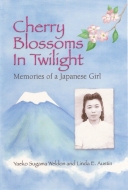
My mom and dad met at dance lessons at Johnson Air Base near Tokyo, when Dad was stationed in Japan in the late 1950s. My mom’s family stories are written into her memoir, Cherry Blossoms in Twilight. She never met any of her grandparents and didn’t even know their names. Her father had family somewhere in Japan, but they lived too far to visit. Her mother’s sister and brother lived in the area, but she didn’t remember their names. I could ask one of my Japanese friends to request a koseki, an official family registry document, from my cousin Kyoko, but then I’d need it translated and it probably wouldn’t mean anything to me. I like stories to go along with names.

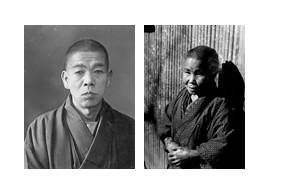
My Japanese grandparents

My Japanese grandparents

On my dad’s side, his father died when I was very young, so I don’t remember him. My Dutch grandpa was a quirky guy, I hear, and had a quirky older brother, my great uncle Ben. Uncle Ben’s wife Bina was a bit quirky herself, and had two scary Siamese cats. Grandpa Peter and his brother Ben had a quirky father, who died before I was born. It’s a wonder my dad is fairly normal, although he did marry a non-Dutch girl and then divorced her, so the rest of the conservative family probably thinks he’s quirky, too. My Dutch grandma was a nice lady. I still love those windmill-shaped cookies she used to serve. She prayed for the souls of her younger son’s family since we didn’t follow the strict Dutch Reformed religion. She was worried we wouldn’t go to heaven. Her older son took after her since he’s not quirky either (he married a Dutch girl). I’m trying to get my dad to write all his stories down so I can see exactly how quirky his family was. He says he’s working on it. He probably just doesn’t want to scare me.

Grandma

My Dutch grandma and her brothers

Posted in heritage | Tagged | 2 Comments

Anchee Min’s “The Cooked Seed” immigrant memoir

Anchee Min came to St. Louis last week to talk about The Cooked Seed, a memoir of her immigration and life in the United States. It is a follow-up story to The Red Azalea, about her life during the Chinese Cultural Revolution. I went to our impressive, newly-renovated St. Louis Public Library and saw a multimedia performance, unusual for an author event. Anchee Min showed us clips of a video documentary, interspersed with readings from her book and a smattering of stories and explanations. It was like a theatrical performance with Q&A afterwards. This woman was definitely not a “cooked seed,” a Chinese saying meaning someone with no future.

The Cooked SeedThe Cooked Seed is the story of a nearly-cooked seed who broke free of everything she had been taught to believe. There was no future for her in an impoverished life in restricted China. By the time Mao died, she knew she had been told lies. As China cracked open, she watched the news clips allowed in from the U.S. and saw “how good the poor people looked—so fat!” The U.S. was her hope, but she would have to rely on a lie, and ingenuity, hard work, and driving ambition to succeed in this new world.

One day while at a park with her baby daughter, Anchee was verbally accosted by three teenaged boys. She wondered why they would say such ugly things to her, and figured it must be because they didn’t know her or any other Chinese. This was a turning point in her life. With Pearl Buck as her hero, Anchee told us, “I wanted to introduce China to America, to defrost the ice in the hearts of Americans.” She turned to memoir.

Red Azalea was published in 1994. Anchee thought, who was she to tell her story? She had to learn “how to tell the truth without shame or fear of punishment.” The truth about her youth in China was harsh. So harsh that Chinese critics lambasted her book as a shameful embarrassment and said she had exposed herself for Westerners. Anchee said even the younger generation was distainful. They don’t want to talk about that period in history. She told us she had become American enough by then to ignore the comments, but every author, especially every memoir author who laid bare their life, understands how painful that must have been. Fortunately her Western audience loved her memoir as well as her historical novels set in China that followed. None have been translated or published in China.

The Cooked Seed is also getting good reviews. Skimming through the book, I found the writing good and the reading fast and easy. I can’t wait to read it, especially after hearing details and anecdotes at the presentation. Anchee gives a voice to the many voiceless, struggling, lonely new immigrants in this country. Her daughter encouraged her, saying, “I want you to leave me your stories, but not sugar-coated.” I didn’t find any evidence of sugar, rather open and honest pictures of what it’s like to navigate a strange place without knowing the language well, of the dangers that lurk, and of how being Americanized affects relationships with those back in the home country. Anchee can also step back and tell us how she sees us and our culture.

Anchee said she is grateful for the opportunities America offered her and her child. She wants to “repay with a well for a drop of water in a drought” and also wants her daughter “to give back.” By the end of the evening, the audience left in awe of all this determined woman had lived through and all that she had become. Anchee is also a photographer, painter, musician, and dabbler in film. And she can dance a number from The Nutcracker Suite. This seed has sprouted and grown many branches.

Other tough immigrant stories The Cooked Seed reminds me of are Jean Kwok’s almost-memoir, Girl in Translation, and the historical novel When We Were Strangers by Pamela Schoenewaldt.

Posted in book talk, heritage, multicultural | Tagged , | 3 Comments