When legends die – false family history

Judy Bolton-Fasman wrote an intriguing op-ed for the New York Times relating her family history stories to Massachusetts Senate hopeful Elizabeth Warren’s claims of American Indian heritage. (Thanks to online memoir-writer friend Gene Bodzin for this.) Bolton-Fasman, in All My Mother’s Stories, says Warren’s ads countering opponent Scott Brown’s questions say, “What kid asks her mother for documentation?”

In her op-ed piece, Bolton-Fasman says her own mother lied about parts of her past. When Bolton-Fasman discovered this, she then questioned the family history of royalty her mother had passed on to her. She never did any genealogical research, though—why bother, she thinks, the point is that the family believed this for generations and therefore their lives were shaped by it. She thinks the details of Warren’s family history don’t matter either:  “It’s a family legend that has inspired her to identify with the dispossessed and work on behalf of the marginalized.”

As a proponent of lifewriting and memoir, I agree with this to a point. Family history can shape descendants’ perspectives of who they are, even if parts of the history later become exposed as legend. It would be quite sad if you were proud to be descended from an Indian tribe and discovered you were not. Maybe it would affect your love of attending Indian tribal gatherings or collecting Indian jewelry, but maybe it would not. The question is what do you do with knowledge of the truth?

I think genealogy fans would argue the truth should be dug up and verified if possible. It would be wrong to blindly or, worse, deliberately pass along falsehoods. As a lifewriter, I would argue the legends should be included in the family history not only as a point of interest but because legends can shape beliefs and values. Also of interest is the family reaction when beliefs are found to be untrue.

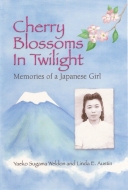
And now for a personal story. My sister and I long treasured a photo of a round-faced, big-eyed little Japanese girl standing barefoot, captured in a black-and-white studio photo. It is one of only two childhood photos of our mother. Except it is not. Several years ago, before dementia had a firm hold on her, my mother said, no, it was of her older sister. I think my sister and I are still crushed by that. I know I’m still clinging to the hope she is wrong.

Not my mother

Posted in heritage | Tagged , | 7 Comments

Poetry is memoir, too

Poetry doesn’t seem at all popular to the general reading public these days yet I know many people write it. The Twitter world is filled with writers of sparse Japanese-style poems like haiku and tanka, perfect for 140-character posts – see @CoyoteSings for one of the best Twitter poets. Some of these writers have websites devoted to their work. Poetry just doesn’t sell so there are no books on the NYT bestseller list or modern-day poets whose names are familiar, with perhaps the exception of Maya Angelou who is more well-known for her other work anyway.

Today, though, I find through my Google Alert that a poetry book by a New York City television anchorwoman, Francesca Maxime, is being released soon through NYQ Books, the indie publishing arm of the New York Quarterly poetry magazine (go NYQ!). Ms. Maxime’s book it titled Rooted:  A Verse Memoir. It speaks of childhood abuse, loss, dreams, and moving on.

As I mentioned in last week’s post, I think much of poetry is actually a type of life writing. A poet puts experience on paper using a few well-appointed words arranged rhythmically. Poetry is passionate, deeply-felt. It is highly edited story, stripped to its core. I find it more than a little sad that few want to read it. I also think we live in a fast-forward, short-attention-span society that doesn’t want to stop and hear something that “comes packaged in silence,” as Walter Bargen, first poet laureate of Missouri describes poetry.

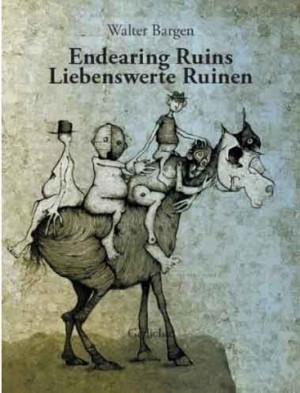
Walter Bargen has written a kind of memoir in poetry, too, called Endearing Ruins, published in Germany and including both English and German translations. I have a signed copy. Bargen recalls growing up in post-WWII Germany and playing in the ruins of war, hearing the war stories of his relatives. It is a touching book filled with silent spaces awaiting the thoughts of readers.

Next week I hope to announce the release of a poetry book of my own experiences that include the life moments of others. Stay tuned. Don’t be afraid to include poetry in your own life writings.

Posted in capturing memories, poems | Tagged | 1 Comment

100 Thousand Poets (and me) for Change

Last week Saturday I was one of a great many poets and musicians at the St. Louis event held for the second annual worldwide 100 Thousand Poets for Change. There were over 800 such events held in over 115 countries including Egypt, Afghanistan, Serbia, and Sudan. Poets were recorded streaming live around the globe to highlight calls for political, social and environmental change. Stanford University archived the recordings. Musicians were usually invited and sometimes artists. Event organizers had freedom to develop their events as they wanted as a peaceful “demonstration/celebration to promote serious change.”

I am impressed by our St. Louis talent. For the first time I heard “spoken word poets” and felt the power of their dramatic presentations, which often include singing or a sing-song way of speaking. Hearing any poem read aloud well is a beautiful experience in itself and this made me want to start attending some of our local poetry readings. I feel that poetry is a type of lifewriting that really speaks of the soul.

Here’s an example of spoken word poetry by Tabia Yapp of St. Louis, from a slam contest.

Below is my own contribution to 100 Thousand Poets for Change. And for anyone who thinks I’m not talking about them, I am. This is for all of us.

The Lost Ones

Posted in poems | Tagged | 2 Comments