Lessons from Kristy Noem’s Memoir – On Lifewriting

Do you HAVE to put everything in your memoir? NO! In a nutshell, that’s the lesson from Kristy Noem’s memoir where she tells about shooting her young dog, plus a goat. Yes, farmers and other ruralites have dispatched unwanted, elder, or infirm animals, even pets, by shooting them. I have rural family history so I know about this. A bullet costs much less than a visit to the vet, no need to travel. (My current rural family would never think of shooting their own pets or the strays people dump their way.)

Many dogs like to chase down little animals (squirrels, rabbits, and yes, chickens), and that doesn’t mean you kill the dog. And if you try to take the “prey” away and/or the dog is overexcited by it, the dog might bite at you—be careful! One daughter has worked with coonhound rescue where volunteer private pilots fly these southern “misfit” dogs north to good homes—so hunters DON’T normally shoot dogs that aren’t good field companions. And you certainly don’t publicize the killing—really crass.

I won’t be reading the book, but Kristy Noem mentioned her dog killing to show she was a farmgirl who could make tough decisions, probably thinking her rural constituents would be impressed. As it turns out, people of all stripes were appalled, because rural conservatives love dogs, too. She must have really thought this shooting would appeal to “her people” and did not use any or enough beta readers (test readers). Seems like she shot her own self in the foot.

When you write your life stories, you judiciously pick and choose what’s important to tell. What belongs, what is the reason to include it. Think twice when including details that might be controversial or otherwise turn people off. Why did you or someone else do this? Back in the day, or in certain cultures, doing this “thing” was normal? (Think spanking, working the fields at age 5, or treating “those people” badly.) Maybe you were really stressed and not thinking straight? Mostly, is it THAT important to put it in your book? Some unpleasant actions or behavior really might be important to tell, but there are ways to gently explain, unless, of course, you WANT people to not like you.

Kristy Noem wrote to get votes. Her “hard decisions,” though, seem more like killing in anger or disgust. She could have chosen a less distasteful story to show she was tough or told the stories with a wee bit of heart or left them out so she wouldn’t come across as a vengeance killer of “man’s best friend” or of a billy goat just acting like the adult male goat it was (just neuter it!). And don’t throw in shooting your old pet horses to the mix! While her actions were of truth and culture, Noem was clueless in Wyoming.

PS: And blaming a ghost writer for including something you said and that YOU have the final say about including is so wrong.

Posted in lifewriting, memoir writing, writing skills | Tagged | Leave a comment

Mother’s Day Stories – Happy, Sad, Bad

Every Mother’s Day most of us celebrate our moms or remember our moms with fondness. Social media is full of us assuming everyone’s mom is or was great. Happy Mother’s Day! Now that I know better, I think of the people who are sad on Mother’s Day. There are mothers that abandoned, neglected, or abused their kids physically and/or emotionally. Not all mothers should have been mothers. Same with fathers. If we’re lucky we’ve had good-hearted mothers, mothers who tried their best even when they weren’t the best. Mothers may have hurt us, but we may love them anyway.

When I write my own family members’ stories or help others write theirs, I always ask about their parents and grandparents. What were they like? Good and not so good, because no one is perfect. We actually relate better to the imperfect! Sometimes we can laugh. Sometimes their actions were just the way things were in those days, and that needs to be said as a matter of explanation to us in “modern” times who might look askance. If a parent or grandparent behaved badly, what do you suppose was the reason—likely they were affected by their own past, their own parents. And THAT is why I like people to know the stories of their parents and grandparents. Their early experiences helped form who they became, and in turn affected how they raised their children. Asking for their stories helps us understand them, and this understanding can help us have better relationships. Writing my mother’s memoir with her helped me to love her better.

I hope you’ve had a loving mother who did her best, whatever that is for her, and I hope you honor her life by asking for her stories. But I leave you to have a thought for those who have/had painful relationships, and those who are missing their mothers, for the mothers whose children have abandoned them or mistreat them, and for the mothers who have lost a child. On Mother’s Day, some people really need love and hugs.

Posted in heritage, storytelling | Tagged , | Leave a comment

Poetry Can Be Lifewriting

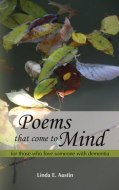
April is National Poetry Month, a time when I like to tell people that poetry can be a kind of life writing. When my daughters were children, I wrote poems to document my feelings for them during their stages of growth from babies to high school graduates. Now they each have a pretty little book of hand-written poems about themselves to remember their young selves and me as their mother. My Poems That Come to Mind booklet holds very short poems, much of it haiku-type, that document my time caring for my mother and being among others with Alzheimer’s at a care home.

I see a lot of poetry out in social media, written freely for all to see. My area has a poetry center and poetry readings while the local colleges have classes on poetry writing. Maybe Amanda Gorman, the first National Youth Poet of the United States, inspired poetry writing, or at least poetry reading. I recently went to a well-attended writing presentation by Missouri’s current poet laureate, David Harrison. People do like to write poetry—are you one of them?

Most modern poetry does not rhyme, making it much easier to write. All you have to do is think about life and feel some rhythm and cadence in your wording. Make a booklet of poems about your life, or include your poems in your life writing stories or memoir. Maybe one of your poems would be a good introduction to your book, or as an ending.

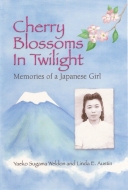
In my mother’s Cherry Blossoms in Twilight memoir of growing up in Japan, she says her teacher took the class outside to nearby woods one day and told them poetry is to “find the feeling inside ourselves.”

Poetry as Memoir 2/4/2018

we sit side by side

holding hands in the soft sun

soon we fade away

dozing in warm nothingness

lost in the dove’s lamenting

– Poems That Come to Mind

Poems for Alzheimers

Posted in capturing memories, lifewriting, memories, poems | Tagged | Leave a comment