Family gatherings, dysfunction, and life stories

Entering the season for family gatherings, Pastor Katie gave such an appropriate sermon today. Do you have a family member who gives you heartburn? Do you know why that person is like that? Perhaps you are aware that your own way of thinking and behaving bothers others. Pastor Katie spoke about how we can inherit the trauma of our ancestors, often unconsciously, but if we are aware of how we pass along this trauma we can break the cycle.

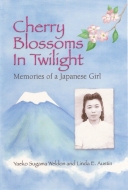
We are each shaped by our family histories and our lived experiences. As a child, I thought my mother’s way of thinking was sometimes on the edge of bizarre. It was not until I sat with her to learn her early life stories to write her memoir, Cherry Blossoms in Twilight, that I became enlightened. She was the product of her very traditional Japanese culture, of poverty and WWII survival, and of how her parents treated her. And so I became an advocate of getting the stories of parents and grandparents to understand how their thinking and behavior affect the next generations, including us and how we will treat our own children. The understanding can bring “forgiveness of sins,” asked for or not, although it’s impossible to forget behavior that hurt us badly.

Most important, becoming aware of how our upbringing and experiences may be contributing negatively to our relationship with others, especially our family members, can lead to change. We can be “born anew,” so to speak. On the plus side, as Pastor Katie said, our ancestors who experienced difficulties may have passed along attributes of patience, resilience, and love! My dad said his mother “was a saint” as she was able to rise above her life circumstances and always be a gentle, kind woman without bitterness. Her sons grew up to be hardworking, gentle, and kind men who took good care of their sweet mother.

Pastor Katie left us with this thought: “We can become the world we want to see… There can be a better story.”

(In July I featured Jeanne Felfe who published her mother’s story of being able to break her family’s cycle of abuse. Her book is I Want to Live! My Journey Beyond Generational Child Abuse.)

Posted in family gathering, grandparents, overcoming, raising kids, relationship | Tagged | Leave a comment

Remembering 1940s Chicago and 1950s Japan

I used the saved letters to write Dad’s memoir for him, at least the military service part. For most people, turning a bunch of old letters into a story is a daunting task. Dad was able to write most of his Chicagoland childhood memories, though, and I put them into good order. He and I worked the manuscript over to the satisfaction of us both, then I formatted it into book form and added photos. This month I finished, and my family is so pleased with the resulting 8.5×11 paperback printed via Lulu.com. My 91-year-old dad is thrilled—priceless!

Together, Dad and I saved some very interesting history. The family was fascinated by his stories and Dad loves remembering. Some very cool old print and slide photos are now in a book, easy to see. I sense that Dad is pleased his life stories are important to us—worth all the trouble of writing and publishing. Who would not feel important as the star of a book!

See also my post on: Publishing two more family memoirs with Lulu

Posted in capturing memories, ghostwriting, history, lifewriting, memoir writing | Tagged , , | 3 Comments

Love Letter for a Japanese War Bride memoir

What a delightful story! Just finished reading this beautiful memoir (not letters) of U.S. Navy man Stephen whose life was changed when he met a Japanese girl while stationed in Japan during the 1950s. What looks like it was meant to be a family-only tribute to memorialize his deceased wife, Ryuko, this was published after Stephen’s death by his then wife, Arlene. It is a sweet love story set mostly in post-war Japan and full of sensitive observations of daily life and culture, not the usual “gaijin” male writing about those people in Japan. Stephen learned the language and enjoyed living in a rental house by the sea with his beloved Ryuko while Japan was still recovering from WWII and not yet modernized. Once they could be married, the couple went to live in the U.S. where Ryuko learned to adapt.

I can tell Stephen wrote this for his children to remember their mother as well as to honor Ryuko after her untimely death. It has a lot of personal details and thoughts that most non-family readers would find distracting, yet it captures so well life in the Navy and in old Japan. This is around the same time my Army dad met my mother in Japan so I found these details dear to my heart. I am working with my dad to finish his memoir that ends with his impressions of post-War Japan and his marriage. My dad, like Stephen, loved this Japan and came home with a wife, as did so many of our military men stationed there.

Years after Ryuko died, Stephen married Arlene who obviously did not feel threatened by her husband’s previous great love and felt his story was beautiful and important enough to publish for anyone to read. So we get to read this very sweet, very personal story brimming over with love and immortalizing both Stephen and Ryuko and the old culture of Japan. As my dad ends his memoir, sayonara.

Posted in book reviews, book talk, heritage, history, multicultural | Tagged , , | 1 Comment