Lifewriting Old "War" Stories

Did your parents or grandparents ever repeat old “war” stories to you, so often you wanted to shut your ears? “I had to walk two miles to school in a snowstorm, uphill both ways!” “I had to get up before the sunrise every morning and help milk cows and feed chickens, THEN I went to school.” Or maybe they really were war stories. Whatever the stories were, they were repeated often enough that they lost their impact and became boring. Then come grandchildren. Guess what? Those stories are new again!

My sister was telling me that her husband, who had a colorful childhood, had told some of his stories enough that the kids would groan whenever he’d start up a memory. Personally, I love his stories as I rarely hear them. Despite the kids’ eye-rolling, his stories really were interesting and often amazing, something his future grandchildren would undoubtedly love to hear. Would they hear them from their parents? Maybe, but I wouldn’t count on it if the stories had lost their excitement. This is a great reason to write your stories down.

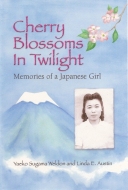
We cannot expect our children to pass on stories unless they were brought up in the storytelling tradition. We tend to find the stories we hear today, the lives we live today to be uninteresting, unimportant. We lived them, so what. Even my mother who survived WWII in Japan thought her stories were uninteresting – everybody she knew went through the same thing.

It is the future generation who will be interested in our stories. Tomorrow will bring progress, new methods, new technology, new history. Our yesterdays will become old history worth telling, worth saving. Old stories will be new again. If you write them, they will read. Maybe they’ll learn a new trick – like how to heat up a can of baked beans on the car engine during a road trip.

Posted in storytelling | 2 Comments

War Stories

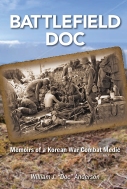
August marks the anniversary of the end of WWII. Our greatest generation is leaving us, so be sure to gather any survivors in your family, military or civilian, and hug them and listen to their stories. Each of those remaining in that generation is a living history book done in personal narrative – no dry facts, but fascinating and inspirational and tragic accounts of what really happened. Learn while you can.

Unfortunately, WWII is just one of many wars in history. We can learn from each of these wars and can only hope to use what we learn to prevent, manage or recover from other wars. What we don’t remember we are destined to repeat. Barry Yelton, author of Scarecrow in Gray: A Civil War Novel, writes a fine essay on his blog commemorating Robert E. Lee, a courageous, moral and religious man who chose to lead the fight of his people in the South but left us with some important lessons still pertinent today. Barry also wrote a beautiful poem to honor an elderly uncle, last remaining sibling of fourteen, who had war stories to tell. Stop by his blog for a thoughtful read.

Posted in war stories | Comments Off on War Stories

WWII Diary of Hideki Tojo

Excerpts of notes written by General Hideki Tojo, Prime Minister of Japan for several years during WWII, were released by the National Archives of Japan and published in newspapers Tuesday. The private musings of the General – memos on postcard sized papers rather than diary entries as some newspapers are saying – written just after atomic bombs decimated hundreds of thousands, reveal his dismay that Japanese government and the public were frightened and losing their backbone (my words). He felt that the military was frustrated by this “lack of nerve” in the face of strange new bombs and pending Soviet invasion. No longer Prime Minister at the time, he stated he would refrain from speaking out against the decision of the Emperor to surrender despite his opposing view. Thank goodness, although there were other military leaders happy to take his place in disagreeing.

My mother, though a teen during WWII, remembers Tojo as the monster responsible for the destruction of Japan. A military leader taking charge of government leaders, Tojo was a warmongerer happy to let the people of Japan be annihilated because of his imperialist pride. I am not surprised that the General wrote such notes even after the atomic bombs, but it is interesting to find such uncompromising hard evidence of his convictions.

Why did Tojo write these private notes to himself? He planned to commit suicide rather than face a foreign-run tribunal, although he failed and was hanged instead. Knowing he was undoubtedly doomed, why would he provide such damning evidence? Obviously, this was a man hardened in his attitude. Did he think Japan could still win? He was ready to die for his convictions and his pride, thinking his countrymen shameful not to—Japan … all or nothing.

Writing one’s thoughts can help make sense of situations, clarify one’s convictions, and leave explanations for those who survive us. In Tojo’s case, he leaves us shaking our heads and perhaps pondering anew if the atomic bombs might have been necessary after all.

Posted in war stories | 2 Comments