Sofia’s Memories – European WWII Experience

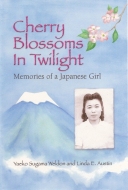
I met a delightful elderly woman at the last meeting of our local Publisher’s Association. She came to the meeting with a spiral-bound (comb-bound) manuscript of her memories as a young girl in Poland who was forced to move to Germany with her family during WWII and finally emigrated to the U.S. right after the war. It was so interesting to skim through her writings, see the many beautiful old photos of her family and the places she lived. Her 8 ½ x 11 inch size booklet was done in the format of page-long stand-alone short stories about memories of her individual family members, places she lived, events in her life, experiences, etc. She and several others thought her manuscript would make for interesting reading in classrooms – that uniquely personal look at what real life was like for people caught in the war and what it was like to start life over again in a strange new country. I shared my Cherry Blossoms in Twilight book with her and we talked of how important it is to preserve these old memories so that people see how so many innocents suffer in wars and to see that underneath our differences, there is no “us” and “them”, there is only “we.”

Posted in capturing memories, war stories | Comments Off on Sofia’s Memories – European WWII Experience

Tom Graves – Honoring War Veterans

Photographer Tom Graves of San Francisco has produced a collection of photos and interviews of war veterans from WWII and the Korean War. “Heroes All!” is currently being exhibited at the May Gallery at Webster University in the St. Louis suburb of Webster Groves until March 24. Mr. Graves hopes his exhibit will encourage people to talk to older folks and learn their amazing stories. He notes, “unfortunately, most of these stories, and most of this knowledge is going to disappear before it’s ever passed on to someone…”

After the wonderful learning experience I had writing and publishing my mother’s story, “Cherry Blossoms in Twilight: Memories of a Japanese Girl,” I certainly can relate to Mr. Graves’ feelings about the need to capture the histories of our elder generation. The people of that particular generation have lived through such significant events in history … the Great Depression, Pearl Harbor, WWII, the Korean War, etc. and their personal experiences are in danger of being lost as these elders are in their last years of life. Their stories are not found in school history books. Their stories are unique and tell what really happened to ordinary people. Mr. Graves says that several veterans told him, “you read about it in the history books, but I was there and what I experienced was different from that…”

I had the honor of speaking with Mr. Graves and thanked him for his wonderful project. His photos of the veterans are beautifully done in black and white. I especially enjoyed reading about Japanese-American war vets, Tuskegee Airmen, and several women in service. I join Mr. Graves in the hope that others will take the time to ask their own older relatives about their lives.

Additional Link

Posted in war stories | Comments Off on Tom Graves – Honoring War Veterans

Writing Your Family History as a Booklet

If you are a decent writer, and even if you are not, you may choose to record family memories on paper. Computer word processing makes this job easy. Type up all the information you have on your family member, place the stories in some sort of order either by approximate date or by subject (like school stories), and try to verify historic facts and dates mentioned. Word processing programs will help correct spelling, grammar, and incomplete sentences, but try to either edit the work yourself or have someone else do it. Also, have a couple other people read the complete story to get an outsider’s viewpoint for suggestions on how to make it completely understandable and easy to read.

Now you can head to the copy shop to discuss your project. Full size 8 ½ x 11 inch paper is most economical. You will have choices in binding and type of cover. Ask the clerk about cost for adding photos if you are unable to scan and insert photos into the text yourself. Copying photos in black and white is fine, costs less than color, and goes well with the theme of old memories.

If using photos, and I suggest you do because visuals really add to the story, allow some blank pages and either have the copy shop add the photos for you or scan them in yourself. It is preferable to add a caption for each photo stating date, persons included, and any explanations. Type captions on the blank photo pages, experimenting for correct placement. You may use a photo for the cover also, experimenting for correct placement of the title and author information.

When you have your pages printed out and photos arranged where they should go, head to the copy shop with your project. Determine number of copies needed and go over the project with the clerk to ensure he/she understands exactly what you want. Do not hesitate to charge your relatives a reasonable cost to purchase a copy of your final product; after all, you have expended time, effort, and expense.

I have a spiral-bound genealogy/family story booklet that a relative on my husband’s side produced. Although it is not a perfected piece of literary work, it is a fascinating and delightful journey into the history of people we love. We are grateful for the efforts of this relative who so obviously put her heart (and a lot of time) into that project.

Posted in capturing memories | Comments Off on Writing Your Family History as a Booklet