Biography and Memoir: how important are approvals

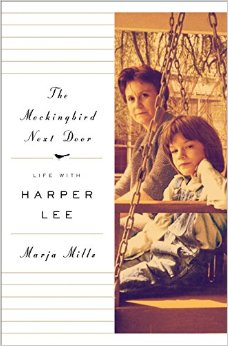
Mockingbird Next DoorThe famously reclusive Harper Lee of To Kill a Mockingbird fame is in the news recently denying she approved of and collaborated with Marja Mills writing the recently published The Mockingbird Next Door, about her and her sister Alice.What happened? Marja Mills, a former Chicago Tribune reporter swears she had Nelle Harper Lee’s years-long friendship and the go-ahead to write about her for publication. Nelle’s sister Alice and a close friend say Nelle knew Marja was writing a book about the sisters. The Guardian has a good article, “Should Marja Mills memoir have been published,” stating details of the situation. Marja seems like a nice woman and the book is very nice to Harper Lee. Marja and Penguin Press went ahead and published the book. What would you do?

So let’s look at this situation, because I think it could happen to anyone writing a memoir or biography. Nelle Harper Lee was 75 years old when Marja Mills knocked on her door in 2001. She was apparently in good health physically and mentally and became good friends with Marja until at least 2007 when she had a stroke at age 81. Five years later, the book’s rights sold and Harper Lee was angry. At that time her sister Alice wrote to Marja, “Poor Nelle Harper can’t see and can’t hear and will sign anything put before her by anyone in whom she has confidence. Now she has no memory of the incident.” A close friend of the Lee sisters also verified Harper Lee’s collaboration. Had Alice, the friend, and Marja been going behind Nelle’s back for six years until the stroke? After watching my mother’s difficult journey through dementia, I’m thinking the stroke mixed with elder age affected Harper Lee’s mind a bit.

Marja Mills does not need Harper Lee’s approval. The memoir is not Harper Lee’s ghostwritten memoir or her biography, but is Marja’s writeup of the time she spent with the Lee sisters and the stories they told her. Nobody is saying the stories are lies, and Harper Lee knew (or soon discovered, as she said later) that Marja was a writer and putting together a book. I don’t see any devious behavior, but a lesson here is writers should think about somehow get proof that a subject is cooperating—while the subject is of sound mind. Saved letters or emails would work. Audio or video of interviews can be prefaced with a statement of full knowledge. If there is any question about the mental capacity of a willing person to begin with, there should be no book, or the family should be consulted, too. I have done that myself when capturing stories of a very elderly subject for educational and historical purposes, involving family so as to avoid possible trouble. Even so, if the subject changes her mind, a moral dilemma exists—to publish or not. I am putting together someone else’s historical memoir for publication, but if he balks at any time, I will not publish it despite all my hard work. To me, though, that is more clear cut than what Marja Mills is dealing with.

Marja Mills was honoring her own time and efforts and the still-lucid elder sister Alice’s wishes in publishing her book. She will have to make peace with herself in going against Harper Lee’s change of mind or diminished mental capacity.  She will have to cringe when others who don’t know all the details lambast her for being immoral. Anyone who writes biographies of living persons could have this problem. Everyone who writes a memoir could have this dilemma. Some solve it by waiting until the person dies. Some will forge ahead because they believe the story has an overriding value. Some will go ahead because they primarily hope to make money off someone else’s life. After reading all the details found in the news about this situation, I think Marja Mills could have waited until Harper Lee passed away—up to ten years. I don’t see her, however, as deceptive or money-grubbing. I see a woman who truly liked Harper Lee as a person, worked on the stories with the sisters’ full knowledge, and wanted to make sure they were represented correctly and kindly rather than by heresay and speculation after they died. Because if you don’t tell your stories, somebody else might make them up.

 

Posted in book talk, lifewriting, memoir writing, publishing | Tagged , | 2 Comments

A memoir of overcoming: Gwen Plano and Letting Go into Perfect Love

Letting Go Into Perfect LoveToday I am pleased to feature Gwendolyn Plano, author of the memoir Letting Go into Perfect Love:  Discovering the Extraordinary After Abuse. Plenty of people have written memoirs about surviving and overcoming abuse of different types, and these are valuable not only as inspiration for others trying to escape from similar situations, but as learning experiences for those who know nothing about these situations. How can a successful career woman come home and live and mother her children in a hostile environment? Who knows what kind of secret lives hide behind a bright exterior? Gwen, too, shows us that behind someone we might see every day, there are hidden demons at work.

I am impressed that Gwen goes beyond the recognition, struggle, and escape to finding personal and spiritual enlightenment. She seems not just a healed woman, but one who is now flying high embracing life and the goodness of God. Read on to see how writing her story helped her and how her story might help all of us. Thank you, Gwen, for being my guest and telling us about your journey.

* * * * *

When I began writing my book, I expected to simply tell my story: a farm girl goes to the big city, falls in love, marries, experiences tragedy, falls in love again, marries but then knows abuse, and along the way has four beautiful children.  As the pages unfolded though, I realized that my story was everyone’s story. The details of my journey are unique to me of course, but the emotions accompanying those details are universal. We all know sorrow, fear, or regret, and we all travel through life trying to make sense of it all. Maya Angelou wrote, “There is no greater agony than bearing an untold story inside you.” I now understand the agony of which she speaks, for the story ultimately is not mine—it belongs to all of us. I simply held a version of it temporarily.

Writing Letting Go into Perfect Love was an integrative process for me. At times it tore open my heart, such that I could barely breathe. However, my tears and gasps came and went because they could. As I accepted and honored these emotions, compassion emerged; and, it was this development that redirected my writing, and quite frankly, my life.

Why did I write this book? I really did not have a choice. It demanded to be told, awakening me in the early morning and drawing me to my desk. That said, midway through my book, I explain a specific and heartfelt reason that many readers might miss.  The paragraph reads:

For more than two decades I had tried to shield my children from the sorrows in our home, but I now realize that my secret separated me from them. My closeted life held my heart, with its forgotten dreams and innocent longings—a heart that the healers had described as “shattered in little pieces” and “held together with tape and string.” Though I did not know how to bridge the years of hiding, I knew I needed to bring levity into our home and healing into our lives.

When we are not free to be ourselves, a vital part of us disappears under layers of numbness. It is this shell of a person that others see—not who we ultimately are.  As I disentangled myself from an abusive marriage, I re-discovered who I am—and why I had hidden for so many years. I also realized that I needed to bridge the chasm separating past and present—for me and for others.

When any of us come out of the proverbial closet, the fear of disclosure can be overwhelming, but the alternative is a lost life. I wrote Letting Go into Perfect Love to help others realize that they can open the door behind which they hide, and when they take this action, an amazing life awaits them.

* * * * *

In writing about her own lessons, in learning the redemptive power of love through suffering, spiritual practice, and grace, Gwen Plano allows her readers to reconnect with the painful moments in their own lives and to use those moments to walk a path toward healing and life fulfillment. – from reviewer Bonnie Boron

Gwen Plano is quite an accomplished woman with four university degrees in different Gwen Planofields of study. She has worked mostly as an administrator at various colleges – including one in Japan! She is also a Reiki Master and certified Lifeline Practitioner. Letting Go into Perfect Love is her first book, but when you see her writing style you will think she’ll surely write more. Learn more about Gwen at her website and blog, From Sorrow to Joy, where you will also find she has a Goodreads giveaway that will run from July 1-8.

Posted in book talk, inspiration, overcoming, Spiritual | Tagged | 3 Comments

Becky Povich – Reminiscing smaller life stories into one big story

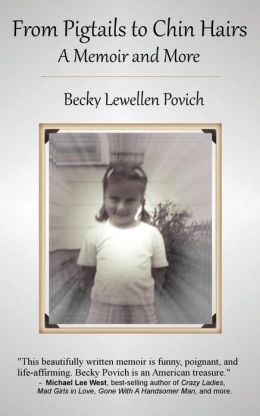
Pigtails to Chin HairsI met Becky Lewellen Povich through the St. Louis Writers Guild and found her book, From Pigtails to Chin Hairs: A Memoir and More, to be exactly what I like to encourage in lifewriting. Many people, if not most, do not have a journey of overcoming this or that or of going on a big adventure of personal discovery, but their stories are interesting and worth writing about. My own mother thought her stories of life around WWII in Japan were boring and everyday. “Who cares about that?” she’d tell me when annoyed by my persistent questions.

Our everyday stories usually involve history and culture and the social mores of the time. Those with similar stories bond through common memories. Younger people learn about the “old days.” We might learn about totally different cultures or perspectives. What bonds all of us together in stories are universal experiences and emotions. Becky is my guest today and discusses the writing of her book.

Becky, please tell us why you wrote your memoir, From Pigtails to Chin Hairs: A Memoir & More.

Although I’d never written anything other than personal letters, business correspondence, office newsletters, and the perpetual Christmas letter, I felt compelled in 2001to begin writing my memoir. Every time I actually say or write those words, I think How crazy was that!? But for some reason, I believed I had the talent to do it.

There were two main occurrences in 2001 that prompted me to write: the near death of my estranged father, and reading Haven Kimmel’s memoir, A Girl Named Zippy: Growing Up Small in Mooreland, Indiana. As I read Ms. Kimmel’s book, I kept thinking if I were to write my memoir, it would be similar to hers; short snippets of everyday life, some that were poignant, sad, funny, hilarious, insightful. In addition to writing it for myself and my family, I firmly believed a great deal of readers would love it and it could possibly make a difference in their lives. And since I didn’t concentrate on just my young, growing up years in the 1950s and 60s, thus the subtitle: A Memoir & More, I also had faith that it would appeal to women of all ages.

What made you decide to self-publish?

I didn’t make that decision until I’d written my way along a very lengthy path, which basically took 12 years from my very first thoughts, to being near completion of my memoir. After things didn’t work out with a small press that had previously been interested in publishing it, I looked into other areas, which included the possibility of a New York agent looking at it. But, my ultimate decision was to go with Createspace for several reasons. The main one was I was nearing the age of 60 and didn’t want to “waste” any time hoping the agent might look at my manuscript, might accept it, and try to sell it. If I was in my 20s or 30s, I might have gone that route. But, then again, maybe not. I was very particular about the title and cover of my memoir, the fonts used, the black and white photos I wanted included, etc. Yes, I wanted to be in complete control of my baby!

Did writing your memoir prompt you to view yourself and your life in ways other than you originally assumed?

Very much so! It didn’t happen right away, though. It took a lot of writing about the sadder times for me to begin looking at things differently. And although there were things I wished I could’ve changed about my life, I also realized that I wouldn’t be who I am today, if any of those events hadn’t happened. I’m very happy with who I am, and where I am, at this stage of my journey in life.

Can you tell us a little bit about your writing process?

Well, I really don’t have one! I’m definitely not a disciplined writer. I’m a “write when I’m in the mood” kind. (Hmm, could be one reason why my memoir took me 12 years to write!) I like to attribute it to the fact that I never had an education in writing. I didn’t attend college, or any writing classes, so therefore I don’t have the proper mindset. (I really am kidding; not about the 12 years, but about my excuses!)

I’m in the beginning stages of writing the sequel to Pigtails, and I know this book will definitely not take years to complete. I learned so much writing my first book and I am a bit more conscientious these days. My goal for the sequel’s publication is 2015. I think I’d better get busy!

– Becky Lewellen Povich is a writer, humorist, and “bliss follower” who started writing later in life. She is published in Chicken Soup for the Soul and other anthologies and periodicals. Find out more about Becky at her website or blog.

* * * * *

Becky’s stories are warm-hearted personal interest stories of growing up in the Midwest during the 1950s-1960s, dealing with her parents’ divorce at a time when divorce was unusual, coming of age and getting married, and continuing the dramas and peculiarities and amusing moments we all have in our own ways. Smiles, laughter, pain, sadness, we can all relate to those emotions.  I like her comment about how she “realized that I wouldn’t be who I am today if any of those events hadn’t happened.” Sometimes you can learn a lot about life and about yourself by writing down your “everyday” stories, and others may learn a thing or two, too.

In case you think you have an everyday and boring life not worth writing about:

How to Write About Your Boring Life


Posted in book talk, capturing memories, lifewriting | Tagged , | 9 Comments