Alzheimer Effects, a caregiver’s perspective

My mother was unable to eat dinner tonight. She has Alzheimer’s so it can be difficult to communicate and determine exactly what’s going on with her and when it started. Usually she doesn’t even know to tell anyone when she is cold and needs a shawl, but tonight she obviously had an upset stomach. She was put to bed early, with the hope she will feel better tomorrow. I went home and downloaded Margaret Ann Brown’s new Kindle e-book, Alzheimer Effects, a Caregiver’s Perspective. I don’t have a Kindle, but downloaded the Kindle app to my laptop and got the pdf e-book version. The Kindle app basically gives you a Kindle! Well, almost.

Margaret spent some time as a private caregiver for a number of clients with Alzheimer’s. While not a memoir, Alzheimer Effects is a type of lifewriting, giving short synopses of personal experiences caring for clients. Each little section on a client is followed by Margaret’s thoughts in prose-poetry form. At the very end is a list of suggestions that might help an Alzheimer patient remain in their home longer. I, myself, have tried most of them on my mother before having to take her to a nursing home to be watched around the clock.

Alzheimer’s is a very frustrating and confusing disease with varying symptoms and expressions that can change in a day. It took a class given by the Alzheimer’s Association for me to understand what in the world was going on with my mom. Even the experts cannot tell you much about the course of the disease because symptoms and stages are different with each person. Margaret felt a passion to write this short booklet to help others see what happens not just in one case, but several.

Alzheimer’s Effects is not a field guide to Alzheimer’s, rather a miniature window to understanding for those just beginning that journey. It is written in a homey style and with love. Anger, frustration and guilt can be alleviated a bit by knowledge, and Margaret provides us with a glimpse of what the future holds. Not pretty, but necessary.

Alzheimer Effects is downloadable for free until January 12.
Posted in aging, book reviews | 3 Comments

Soba noodles for new year

I guess I’m getting carried away with the good luck foods to start the new year off right. Last night I had soba noodles while the rest of the crew asked for udon. But udon is kind of a fat noodle, I warned. But, they’re long, said the daughter. We’ll see who has better luck this year.

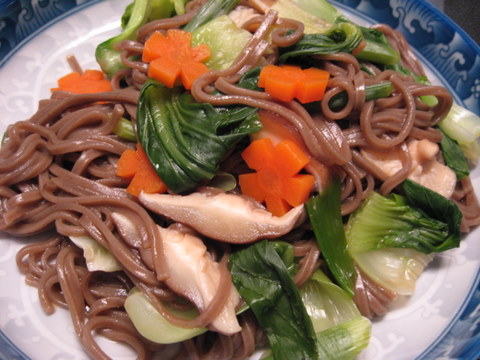
Long and thin for long life of moderation

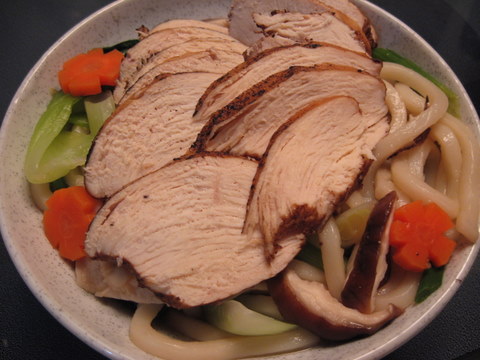
Soba broth is made of water, enough soy to turn it dark brown, a shot of mirin cooking wine, a good pinch of hon dashi (granules or flakes of fish-flavor), and a bit of sugar to taste. Place noodles in just-boiling broth, turn to simmer. Add carrot slices and cook until noodles are near done (about 5 minutes). Then throw in bok choy or fresh spinach leaves, shitake mushroom, green onion slices, tofu, whatever. I drain the broth out, but you can eat as soup, too. Udon noodles are cooked the same way but always eaten in broth. I suppose you could use a bit of vegetable or chicken broth instead of hon dashi, but just enough for a bit of flavor. I often put slices of chicken simmered in water, soy, garlic and ginger on top of the noodles.

Udon soup with chicken

Posted in holiday, recipe | Tagged | Comments Off on Soba noodles for new year

New Year good luck foods

New Year’s Day is waning and we’ve eaten almost all of the traditional good luck foods I planned to serve. Only the herring left. Do you have good luck traditions to celebrate the new year?

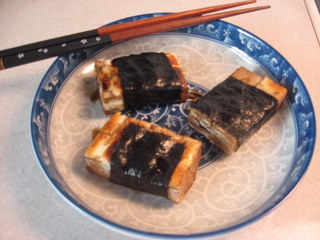
My family is of mixed heritage, and on the Japanese side, New Year’s Day is a big deal – the biggest holiday of the Japanese year. At my house we must eat mochi rice cakes, which are not cakes at all but mashed up Japanese sticky rice made into patties which are then grilled or put into soup. So gooey you must be careful not to choke. I buy ours from one of our local international grocery stores, and this year they were pretty fresh! If you’re lucky enough to have a mochi-maker or a friend with one, freshly-made mochi is even more gooey and can immediately be coated in a mix of soy bean flour and a little sugar or just dipped in soy sauce and wrapped in a bit of seaweed as I do with the storebought kind that I grill over a stove eye. Mochi can also be made into desserts, but I’m used to the plain kind for new year. Traditional mochi making is pretty fun to watch!

Another Japanese food tradition for the new year is eating soba noodles, which are long and thin like spaghetti noodles. The kind made of buckwheat is preferable. Long, thin noodles symbolize long life of moderation. No short, fat noodles!

The other half of me is Dutch, so we usually have a jar of pickled herring around to celebrate my dad’s heritage of new year good luck. You can see that we have to space out these eating traditions!

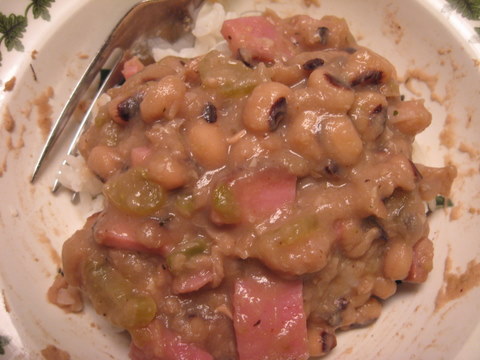
The American tradition in the South, where my husband’s family is from, is to eat peas, or rather any kind of cooked hard bean.  While I don’t think my mother-in-law follows that tradition, sometimes I’ll make Hoppin’ John with black-eyed peas as I did today, or perhaps red beans and rice.

Whether these traditions work or not to bring good luck isn’t really the point. It’s the fun of following tradition, pretending, and good eating. Wishing you all a very happy and healthy new year!


Mochi

one package white mochi cakes*
soy sauce
sheet of nori* (black seaweed used in sushi)

Spray a small rack with spray-type cooking oil. Place on a stove eye and turn heat to low. Place mochi cakes on the rack, leaving space between to expand. Slowly grill, turning over to cook both sides. Cakes are done when they puff up (often the inner rice will explode outwards). Place each mochi on a small plate of soy sauce, coat both sides with soy. Use scissors to cut a small rectangle of seaweed to fit around the mochi, coating the seaweed piece on both sides with soy sauce before wrapping around the mochi. Place the mochi on a clean plate for serving. Have extra soy on hand and chew carefully – small children and the very elderly should not eat mochi, nor should anyone with dentures!
*purchase from international or Asian grocers

Posted in holiday, recipe | Tagged , | 2 Comments