Everyday Memoirs – How to Write About Your Boring Life

“99.9 percent of people lead boring lives. But every single one of them is trying to make some sense out of his or her existence, to find some meaning in the world, and therein lies the value and opportunity of memoir.” So goes a January 09 Reader’s Digest article entitled Great Tips on How to Write Your Memoir. This is a wonderful piece that includes anecdotes from Frank McCourt (Angela’s Ashes) and comments by Jeanette Walls (The Glass Castle) who says, “I’m constantly urging people, especially older folks, to write about their lives.”

As the article says, you don’t need trauma, misery, abuse, war to make your life interesting. I am working on a short memoir of the early lives of an elderly couple, 90+ year old neighbors with everyday stories that play out like a movie set in “the old days.” They entertained me with tales of jumping on “bag swings,” swimming down the street in a stream of water from a draining swimming pool, walking miles to get home. They described small town life during the Depression years, what New York’s 42nd street was like on VJ Day. They are living history, life and times from the 1920’s on.

For most people, lifewriting means writing down the facts of one’s life. While in itself interesting, that’s more like a textbook of your life, not a story. Beyond the facts and events, what really makes a story is the extra dimension of personality, putting yourself into it with feeling – and you do have some feelings about your life stories, don’t you? Turning a series of stories into memoir involves working those stories into a bigger picture involving reflection, growth, a message, a meaning, your “takeaway.” What impact did these facts and experiences have on you? They may have been everyday experiences, but your spin on them reveals who you were, who you became.

My neighbors may not realize it yet from the first draft in their hands, but there is a theme that runs through their stories and a philosophy of life that shows through. Their life stories will easily turn into a memoir. My job now is to ask more questions, to use the draft to draw out more history, more stories, more thoughts and feelings. Memoir writing to me is like playing the 50-questions game about every draft paragraph, except yes/no questions aren’t allowed. The goal is to create a three-dimensional person. After all, you want to let your great, great, great grandchildren know who you were, not just what you did.

Posted in lifewriting, memoir writing | 3 Comments

Painful Memories – Kirkwood

Yesterday was the one year anniversary of the Kirkwood City Hall shooting. It brought back memories of being in a church meeting at night, listening to hovering helicopters and sirens, going into lockdown, being fearful of an unknown menace a couple blocks away. Then cell phone calls trickling in from family feeding us news as it was released bit by bit on TV. Fear, shock, pain at the horror of a man possessed by evil executing loyal and loved city servants.

After the tragedy, members of our church and some residents of the community commissioned choral composer Joseph M. Martin to create a musical piece to promote healing and understanding. The resulting Canticle of Peace was performed by our choir at each of our four church services this morning. It was beautiful, the words gentle and comforting.

What could have resulted in hate, bitterness, anger, racial divisiveness – and those emotions did surface – was astonishingly turned into an opportunity to reach out, to try to understand, to love, and to heal together. What better way to remember an anniversary of a tragedy than to celebrate the goodness of the people who died and the way that good fruit can grow from blackened earth.

For anyone who is grieving a loss, remembering the good, remembering the love is the greatest tribute you can give to the one who has gone and surely the greatest pathway to healing. Remember the blessings, and let them temper the pain of loss.

“Peace, fall like a gentle snow.”

Posted in bad memories, death | Comments Off on Painful Memories – Kirkwood

Liar! Famous Memoir Fakes

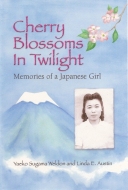
One after another these days we are seeing high profile memoirs proven to be falsified. The first in this latest series was James Frey’s A Million Little Pieces which was exposed shortly after I published the first edition of Cherry Blossoms in Twilight. I was angry. I had gone to a lot of trouble to make sure everything in my mother’s WWII memoir was true to the best of our knowledge, both personal and historical. Here was a man who seemed to have no qualms about passing off fabrications as the truth, looking Oprah (and her millions of viewers) in the eye and saying it was all real. Now we have Angel at the Fence by the Rosenblats who lied TWICE to Oprah, first in 1996 and then in 2008. Misha Defonseca can now write a memoir about how she faked her memoir about being raised by wolves (and who believed that in the first place?) and the lawsuits and the ridiculous circus of accusations ensuing. Other fakes include Love and Consequences (rich girl fakes being foster child running in gangs) by Margaret Jones, Augustin Burrough’s Running With Scissors (overactive imagination say the brother and mother), and UK lawyer Constance Briscoe’s Ugly which caused her mother to sue her for libel.

Of course, fake memoirs are not new. Go Ask Alice (1971) was said to be based on a real diary, The Education of Little Tree (1976) written not by an Indian but a white supremacist, A Child Called It (1993) by David Pelzer, called a “professional victim.” Why do they do it? Mostly for money and fame. A sensational true story sells better than sensational fiction. The Rosenblats wanted to “bring happiness to people” with their story and one might argue some of the others wanted to get a message out. The end result, however, is that all memoirs suffer from those who embellish too much in order to get published. All become tainted as readers wonder, “Is this one really true?” No one likes to be fooled into crying or empathizing over a fake. In the Rosenblat’s case they have provided fodder for Holocaust deniers.

While truth can be a difficult thing to pin down, there is a line in the sand which we should not cross. Is it the truth as you know it, as you have researched it, or are you being lazy in looking up the facts, or do you know in your heart that you are making something up. Life writing maven Sharon Lippincott explains this further in her blog post of January 11, discussing an Isabel Allende interview where she says that her memoirs “will always be somehow fictionalized.” In the end a memoir is how you remembered it to the best of your knowledge, hence the term “creative nonfiction.” Small details are not so important, like what you ate or the color of a room, and if you’re not sure about something bigger, simply write “As I remember,” or “I think,” or “I believe,” but please, don’t play us for fools. If you lie, someone will catch you.

Posted in memoir writing | Comments Off on Liar! Famous Memoir Fakes