Editing your memoir, showing versus telling

All writers need an editor. Even editors need editors. Family-only writings can be held to looser standards, but have a few people read over the manuscript to look for typos and improper grammar and anything that does not make sense, is not clear, or is phrased awkwardly. Friends who don’t know your past very well would make good “beta readers.” After all, the great-great-great grandchildren may someday read your book and you want them—strangers—to understand everything you wrote and not stumble over twisted, rambling sentences.

Yesterday I attended a talk by Suzann Ledbetter Ellingsworth, a writer and editor, or “wreditor” as she calls herself. This woman is a no-nonsense ace editor quick with rapier wit and red pen. She taught us what to hack out of our manuscripts. “Trim the fat, make every word count.” She is passionate about her work—and everyone else’s. I thought she would discuss how to “show me the glint of light on broken glass” per Anton Chekhov’s show-vs-tell admonishment to writers not to tell us the moon is shining. Mostly she showed us how to find useless, distracting words and stab them with that broken glass. And there are a lot of useless, distracting words. When those words are removed or replaced, the showing happens, and the reader becomes more engrossed in the story.

I’ve read several recommended books on how to write. They were disappointingly vague, full of chatter and prompts, without much talk on the technical aspects of writing well. Only Stephen King’s book, “On Writing,” stood out. Mr. King said the most valuable learning experience he ever had as a young writer was when an editor slashed his newspaper article to bits, showing how he could improve his writing. Suzann did that for us Saturday by using examples of common writing language (found even in bestsellers) to explain why they make for wishy washy sentences. And oh, the difference she made by fixing them.

I’m sure you’re dying to know what Suzann said. I’ll give a few examples, using both her and my explanations, but she gave too much advice for me to repeat in this little blog post.

1. Most adverbs are bad. “She went quickly” could be replaced by “She ran” or “She scampered.” Many adverbs are redundant, too, as in “She ran quickly” (running implies speed). “She raced” might be better wording. Use more accurate verbs, or explain the situation better.

2. Remove most instances of the word “that.” The sentence will probably mean the same without the useless pebble in the middle. “The flowers that I held…” become more fragrant as “The flowers I held…” and may be intoxicating as just plain “The flowers…”

3. If you saw something happen, just say what it is. “The car came up the road,” not “I saw the car come up the road.” Not everything should be about you.

4. Size adjectives tend to be meaningless. The dog may be a large brown mutt, but maybe  it’s a St. Bernard mix (or he had a dog the size of a St. Bernard). Maybe it’s a Chihuahua (and not a little Chihuahua – redundant!). Let the reader see the dog in her mind. Question:  What is a small mountain? Answer:  a hill.

5. You are not going to do anything. You did it. “I walked to the store,” not “I’m going to walk to the store,” unless you’re going to walk to the store tomorrow.

Suzann also emphasized using active voice. Passive voice is commonly identified by “ing” verb endings, and the MS Word spell checker usually flags this. Suzann said we often speak using passive voice, but we should write using active verbs, even in dialog. I call this “writing strong sentences.” Not “I had been thinking about that,” but “I thought about that.”

I recently gave a sample edit with explanations to someone who was astonished by all the redlines. He said, “I know this stuff, why couldn’t I see it?” Even writers who know this stuff are blinded because they are too close to their work. Our minds see what we meant to say, and there are just too many ways to write weak sentences. That’s why we all need editors. Usually we all need several proofreaders, too.

You’re welcome to comment on any writing errors or weaknesses in this blog post. If you find any and you are an author or editor, I’ll tweet you some publicity. You’re also welcome to leave your own writing tips in the comments.

DSCN2743

Posted in writing skills | Tagged | 15 Comments

Easter: writing about death, rebirth, and other spiritual experiences

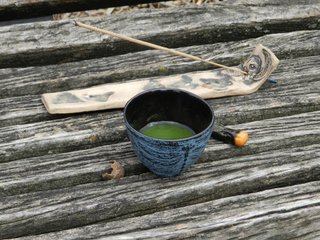
Last weekend my sister came to visit and we had a private memorial for our mother at our local botanical garden, under the cherry trees – still tightly budded – in the Japanese garden our mother loved. I decided it was time to write down the experience of our mother’s month-long journey unto death. I wanted to share it with my sister to make sure I got it right and that I hadn’t imagined the awesome power of whatever it was going on.

At the nursing home’s December memorial for the residents who had passed away in the last six months, the visiting pastor told us to remember that the follow-up to Christmas and Jesus’s birth is Easter and Jesus’s death and resurrection. That resurrection tells us there is life after death. Believe it or not. And believe it or not, plenty of us Christians find ourselves wondering at times (or a lot of times) if that’s really true, at least for us mortals.

My sister and I were honored to be present watching over many days the gradual withdrawal of life from the human body and its final transformation into a presence we felt fill the corners and empty spaces of the room and then leave like a mist dissipating in the morning sun. At the end, we stood silent, stunned, wondering if two people could imagine the same bizarre, mysterious thing if neither spoke of it. I wanted to write down the experience, to remember it, to save it, to savor it, to find comfort in it, but I wasn’t ready until four months later.

When we write down our stories, how many think to write about their spiritual experiences. How many are brave enough to write them! Many times I’ve heard people talk about these kinds of moments, usually when they think they are safe with others who might believe. Easter is the annual reminder that there is something big and powerful and wonderful out there waiting for us. If you’ve felt it, will you share your story?

DSCN2518

Posted in capturing memories, death, Spiritual | 10 Comments

A snowy day of photo albums and memories

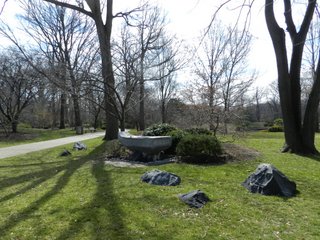
Yesterday our family had a private memorial for my mother in the botanical garden she loved. The day was sunny and spring-like, and we had to dodge swarms of little children and parents there for an Easter egg hunt. We couldn’t believe the forecast called for snow the next day.

A snowstorm began around 8:00 this morning. At nightfall I measured nine inches of wet snow, with lighter swirls of flakes still expected. No school tomorrow. We know March comes in like a lion, but we didn’t expect it would go out as a fluffy, white, cold lamb. My visiting sister and her husband left at noon, and their drive home took an extra two and a half hours, with forty-five cars sighted in ditches. Facebook and Twitter are full of snow photos. The photos will help us all remember this crazy weather weekend.

Before she left, my sister and I started going through a box of my mother’s old photos. This can be a sad task after someone dies, but we had a good time discovering photos of the Japanese family we’ve never met. We also enjoyed seeing our own old family photos—look how skinny I was, can you believe that hair, there’s our old backyard, how come I didn’t get one of those pictures? There’s a lot to be said for print photos vs digital. There’s also a lot to be said for writing dates, people’s names, and places on the backs of photos.

I love sitting down and looking at print photo albums. To me, the physical act of turning pages adds to the sensory experience of delight at re-discovering forgotten photos. Scrapbooking is wonderful, but regular albums are just fine, too. Anything to get those photos out of the shoebox and bringing back good memories. I make family albums, but also personal ones for each daughter. They have a lot of fun looking through their albums and sharing them with friends. A physical book lying around seems to draw attention more than a file on a computer.

I took snow photos today, and some may make it into an album. I’m going to spend the rest of the evening going through my mom’s old photos—those make me feel a lot warmer.

Yesterday was a beautiful day for an outdoor memorial

Yesterday was a beautiful day for an outdoor memorial

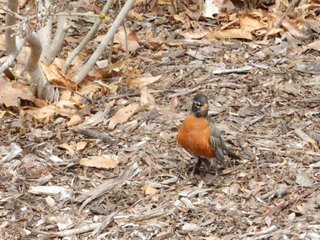
The robins have failed to bring spring!

The robins have failed to bring spring!

Nine inches of snow fell today
Posted in Uncategorized | 4 Comments